


Matcha.
Tote bag.
Wired earbuds.
The “performative male” has become one of Generation [Gen] Z’s most talked-about memes — an archetype often tied to lattes, indie music and a deliberate image.
According to an Aug. 14 New York Times article, the term describes someone who “curates his aesthetic in a way that he thinks might render him more likable to progressive women,” positioning him as the opposite of a toxic man. What began as small lifestyle choices, from music preferences to everyday accessories, has become distinct indicators of the archetype.
Although the “performative male” title really exploded in August 2025, its roots had already been growing online since June. The term, garnering over 70,000 posts under “#performative,” first spread through TikTok and Instagram, where short video clips made it easy to spot a type: a guy sipping matcha, swinging a tote bag and queuing a female indie artist.
At Sunny Hills, however, this archetype feels more like a coincidence than a performance. While social media turned this image into a meme, students say their everyday interests don’t come from trends — they just happen to align with it.
Sophomore Sydney Odipo said seeing the trend appear on campus felt surreal after watching it circulate online for months.
“I think it’s really funny when guys are performative because it never actually fulfills its purpose,” Odipo said. “Now, even things like matcha or Labubus are seen as performative, so they’ve lost that sense of being ‘cool’ or ‘mysterious.’”
SAME SCRIPT, NEW AESTHETIC
The performative male might be one of 2025’s newest memes, but it isn’t the first of its kind. Versions of the archetype have existed for years under different names: from the softboy in the late 2010s to the indie boy on early TikTok. Each reflects the same idea: presenting a curated sense of sensitivity to seem more interesting or appealing.
“A trend I would say is similar is the COVID-19 indie boy trend, when it was popular to be ‘different,’” Odipo said. “They’re both very performative and meant to impress others.”
Junior Aiden Choi said the meme has shifted how people interpret the style and behavior behind it.
“It originally was a style girls liked, so guys performed to appeal to them — hence the name,” Choi said. “But it’s been mocked so much now, less people act ‘performative.’”
Earlier variations leaned on flannels, poetry or Spotify bios filled with Arctic Monkeys lyrics. The characteristics entailing each meme might be different, but the purpose remains the same — the performance of being “different.”
What sets the performative male apart, though, is his self-awareness. While the softboy often tries to appear effortlessly authentic, the performative male knows he’s in the spotlight. Posting a photo with wired earbuds and feminist literature isn’t necessarily about belief; instead, it’s about knowing what that looks like online, according to The Phoenix.
“The whole reason the performative male was created was because they were tailored to women and their interests in order to attract them,” sophomore Ava Nguyen said. “Even though those qualities aren’t truly them, they, in a performative way, make themselves seem like that.”
In that sense, the performative male feels less like a trend and more like a reflection of how identity functions in the age of social media, according to a Sunday, Sept. 28, Forbes article.
HOW TO BE A PERFORMATIVE MALE 101
What makes the performative male recognizable isn’t just what he wears or drinks; rather, it’s what those choices represent.
The matcha latte, for instance, has evolved beyond a drink symbolizing Japanese cultural significance and a unique earthy flavor. Its soft green color and “clean” appeal — often associated with health and simplicity — align with the aesthetic’s calm, intentional vibe, contrasting with coffee’s masculine image.
Tote bags are held in a similar ideal: practical and minimalist to suggest awareness without performing them.
Meanwhile, wired earbuds have reemerged against the wireless “upgrade,” hinting at nostalgia and simplicity. Paired with thrifted jeans, they complete an image that feels both effortless and curated, serving as a typical performative identity.
Even music plays a role. Artists like Clairo and beabadoobee have become staples of the image, often used as background for TikTok edits. Their songs depict a focus on aesthetics, but also sincerity and emotion.
Together, these details form a look that signals irony and sincerity at once.
Although many view this trend as a lighthearted joke, some believe that it’s blatant criticism.
According to Business Insider, the trend “mocks men who ‘perform’ in a way that appeals to women.”
“In a way, there are some guys who dress and act interested in these ‘performative’ things like reading feminist literature and listening to Clairo or using tote bags,” senior Elijah Orlino said. “But, I think there are some people who truly enjoy these things and dressing this way.”
L.A.-based stylist Amanda Massi, who was interviewed for Business Insider’s Sept. 8 coverage of the trend, said that while the performative male has become a joke because of countless memes, the aesthetic reflects a “deeper psychological and cultural narrative at play,” blending comfort with self-awareness.
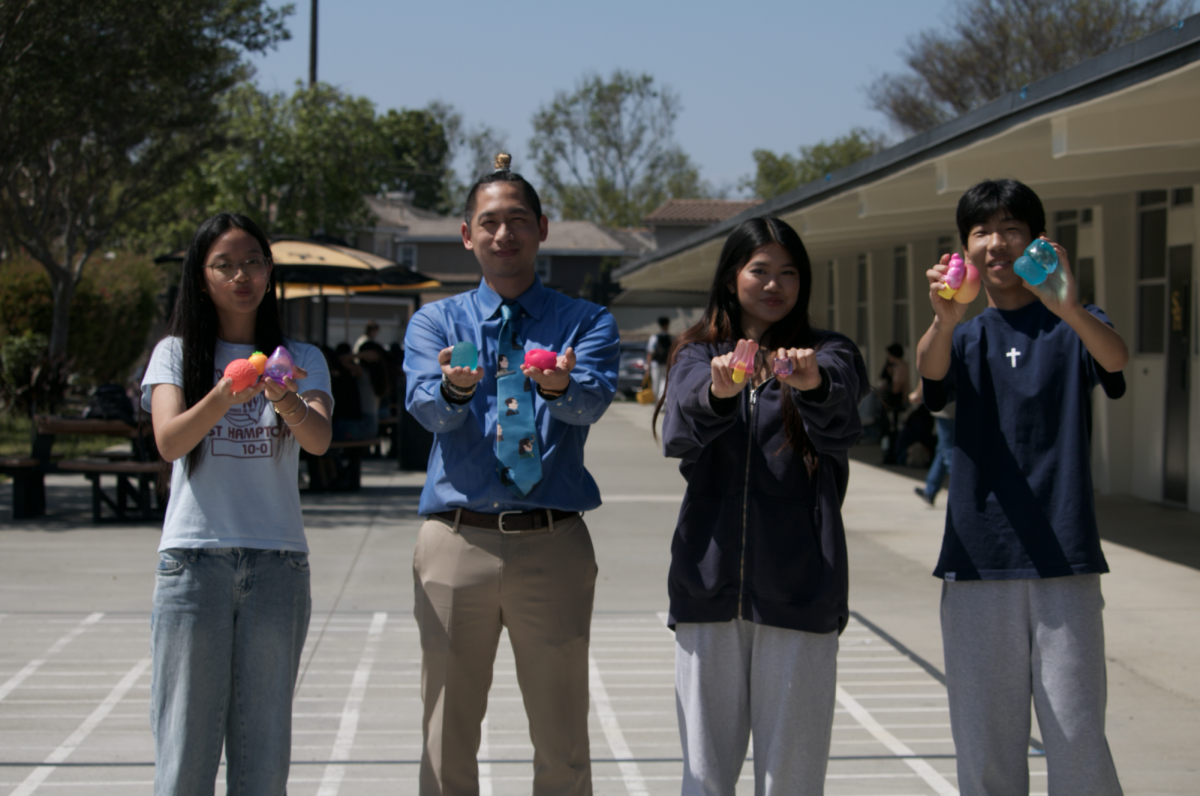
Massi described the look as slouchy jeans, wired headphones and Labubu dolls often clipped on bags or pants. Even the drink is part of the performance; matcha, once just another cafe order, has turned into an “artisanal or niche beverage” that signals taste and intentionality, according to the article.
Aside from the countless parody videos on social media, this archetype has escaped the internet, with dress-up competitions popping up from the University of Southern California and the University of California, Berkeley, to Germany and Canada.
At a Singaporean event, participants wore baggy jeans and vests, tossed sanitary pads into the air and chanted slogans like, “We must stop period cramps,” all while playing songs by Clairo and beabadoobee.
Senior Nicholas Sebial said the event took the trend to an extreme but in a lighthearted way.
“I think it was a little exaggerated, but it’s a fun thing that pokes fun at these types of people,” Sebial said. “It’s harmless fun that’s meant to be fun for everyone.”
From global stages to local events, the performative male made another appearance — this time, close to the SH community.
Troy High School’s Associated Student Body [ASB] hosted a “Performative Contest” during the school’s homecoming rally on Friday, Oct. 3, challenging students to embody the viral archetype for a prize.
Sunny Hills later echoed the meme in its own way. During Homecoming Spirit Week, the ASB introduced a “Performative Day” on Wednesday, Oct. 29, encouraging students to “have another identity and blend in like Bruce Wayne” by dressing in performative clothing or carrying props, according to the Saturday, Oct. 25, @sunnyhills.asb Instagram post.
“I thought it was cool to see people dressed up in a different style, like performative because it’s not something we usually see,” activities commissioner junior Kailyn Min said. “The spirit day was for people to be creative with their outfits and try something new.”

(Image used with permission from Joshua Kwak)
UNINTENTIONALLY MATCH(A)ING THE ARCHETYPE
At Sunny Hills, however, the discussion takes a different stance. Students who drink matcha or listen to indie artists say they don’t see themselves as part of the trend at all.
Sebial said TikTok has exaggerated the archetype through staged posts and curated selfies, which makes the trend feel amplified compared with reality. Still, he said the label overlooks how many people simply enjoy those things without the intention of performance.
“I like matcha because it actually tastes good, and I like tote bags because they’re a practical way to carry my stuff,” Sebial said. “It would be pretty annoying for people to assume I’m doing it for attention, but I think most know I’m not.”
The senior said the most extreme examples he’s seen are performative male contests across the U.S.
“It shows how we use the archetype as a joke and comedic way now, like to make fun of it,” he said.
He said the look may pass, but the mindset behind it will linger.
“The items will fade because they’re fad, but being performative for attention won’t go away, since it’s more of a behavior than a trend,” he said.
Junior Zhjan Stefano Manuel Ruedas said he identifies with the look often associated with the archetype — from Doc Martens and baggy jeans to wired earbuds — but not the performative intent behind it.
“I would consider myself a performative male, but not because I do it for attention,” Ruedas said. “It’s just that I fit the genre.”
He sees much of the online content as repetitive.
“They’re all copy and paste of each other,” said the junior, describing TikTok clips featuring fit checks set to indie tracks.
While students reflected on how the label fits their peers, computer science and math teacher Summer Ng said she views it differently.
“When I hear the phrase, I think baggy pants, tote bags, permed hair and matcha in their hand,” Ng said. “But I tend to assume they’re being genuine, because if they know the stereotype, they probably want to prove they actually like those things.”
Ng said she hasn’t noticed many students at Sunny Hills who fit the archetype, suggesting that the term online might even discourage them from showing their interests.
“Maybe because the archetype exists, some students don’t want to be associated with it,” she said. “I more often see performative males as college-age kids out in the wild.”
The teacher added that the performative male often reminds her of an older archetype.
“I kind of view it as the male equivalent of a pick-me girl,” Ng said. “The guys who do it might be trying to say ‘I’m not like other guys; I’m soft, I’m sensitive, I’m relatable.’”
SEPARATING AUTHENTICITY FROM PERFORMATIVE
As the label circulates, many online creators and students have begun to push the stereotype away.
Some TikTok users have posted videos titled “I don’t want people thinking I’m drinking matcha because it’s popular” and “The fit I would’ve worn for dress-as-your type day if it wasn’t canceled.”
Others have taken a different approach, encouraging people to just enjoy things without fear of being judged.
Students expressed a similar sentiment.
Ruedas said what bothers him the most about the label is how it reduces genuine interests to a stereotype.
“Some people actually enjoy those kinds of stuff,” he said. “But then they get labeled as performative because of that.”
Sebial shared a similar view, saying people should focus less on how their interests appear and more on what makes them happy.
“I think people should just do what they like without worrying about what others think,” he said.