



In the left corner of Room 37 sits a TV.
But it’s not the modern flat TV. It’s chunkier and clunkier, shaped more like a box. It’s also dusty, usually turned off and often goes unnoticed to students. It’s not the View Sonic monitor that’s in every classroom on campus — it’s a video cassette recorder [VCR] TV.
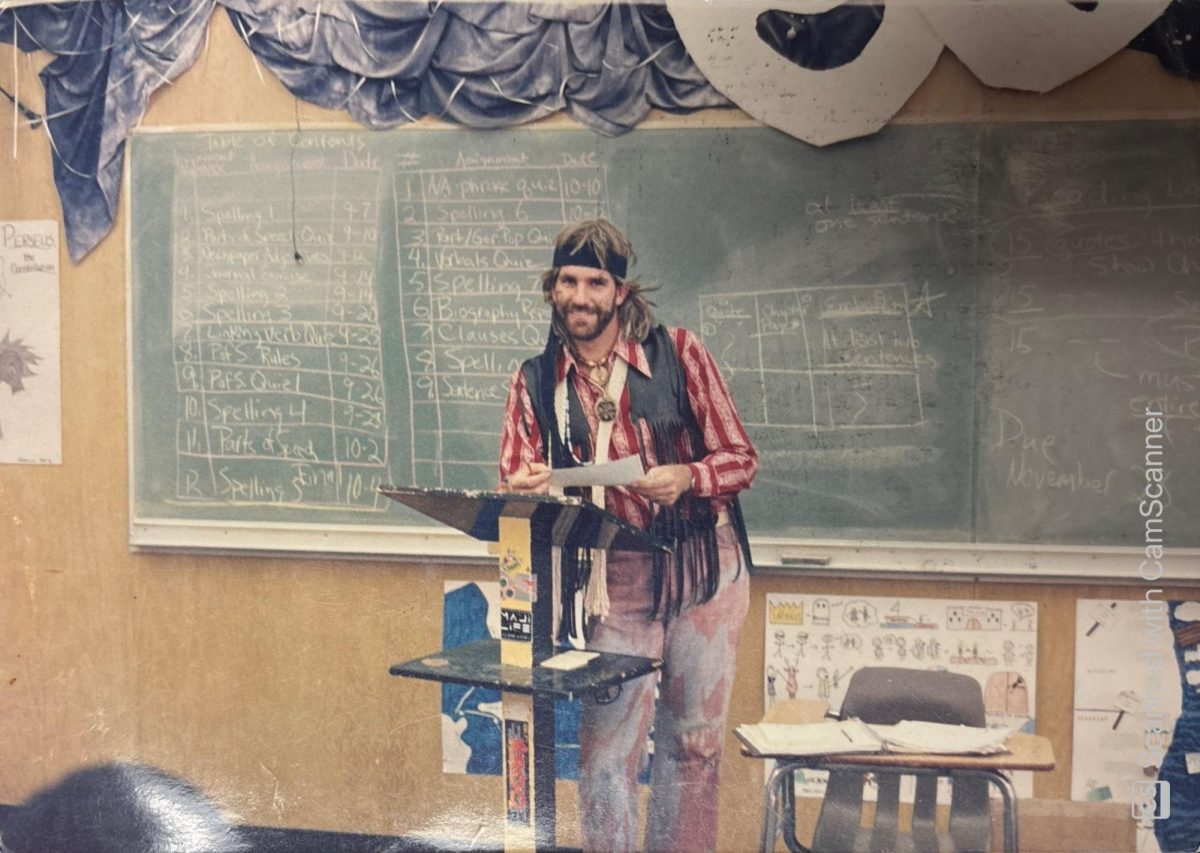
Here, English teacher David Wolf plays old tapes that he can not in his modern computers.
“I own a lot of cassette tapes, but I don’t think any of the newer TV models can play them,” Wolf said. “Every year, I show my students an old clip of me and my friends bungee jumping on this because it can play VCRs, so I keep it in my room.”
But it wasn’t just him; he noticed a recent trend of people bringing back the retro mediums that he’s used to.
“Digital feels sterile and lifeless, while analog feels warmer and more human,” Wolf said. “We want to go back to when things were warmer and brighter; it’s also a fad, but we’re challenging the futuristic progress.”
Many Sunny Hills students have been going backward in time to use older technology and reject the stride of progression.
TIME MACHINING TO THE BEGINNING
In 1888, the first film camera emerged when inventor Geroge Eastman launched the 77then-Eastman Kodak company with the slogan, “You press the button, we do the rest,” allowing photographers to take photos with a shutter, according to an Eastman Museum article.
Film photography provides benefits such as more control over camera settings, high dynamic range, lower initial costs, no fear of losing power and more purposeful photos, according to Adobe Blog; however, it also has cons, such as consistent extra costs over time, fewer photos that can be taken at a time and a time-consuming development process — where unlike the immediate image processing in digital cameras, film photographers have to wait until the rolls are developed.
When the popularity of film cameras first peaked, it cost around $150-200, which is equivalent to $800 in today’s inflation-adjusted dollars. But with the rise of digital cameras, older methods took a dip with prices going below $10-50. Now, with the resurgence of film cameras, prices have gone up to $100-200, depending on the brand, according to Casual Photophile.
Most, however, can only be bought through retail sites, such as KEH Camera, UsedPhotoPro, Kamerastore and Bluemoon Camera, as older models are no longer in production.
On the other hand, the first digital (filmless) camera was invented in 1975 by Steve Sassion at Eastman Kodak, allowing users to process images a couple of seconds after the photo had been taken, according to a BBC article. The top-rated, most recent digital cameras include the Nikon Z8, Sony A7R V for Artificial Intelligence [AI]-powered autofocus and Fujifilm X100VI for compact and premium photography.
Digital cameras often range from budget-friendly options under $100 to professional, high-end models exceeding $9,000.
Similarly, the first vinyl records were introduced by Columbia Records in 1948, with prices ranging from $20-40, revolutionizing music with longer playing times and better sound quality and at-home listening availability, according to Disc Manufacturing Services. Compact discs [CDs] came to a rise in 1982 through Sony, replacing vinyls. However, both mediums experienced a dip in sales when online streaming platforms such as Spotify developed in the late 2000s, allowing users to listen to music for free.
In November 1996, DVDs, which cost between $5-20, were introduced in Japan, but digital streaming services like Netflix, with a monthly subscription price starting at $7.99, replaced the physical medium.
STEPPING FORWARD, LOOKING BACKWARD
But despite the innovations that provide comfortability, more people have been reaching for older, underappreciated mediums.
Video production teacher Daniel Flores, who currently has analog items on display for their current unit of “The Evolution of Teen Films and Pop Culture History,” said he noticed students using those mediums for his class recently.
“Some students use vintage camera equipment for photography and film projects,” said Flores, who also still owns several film cameras, vinyl records and a 4K physical media collection. “I have had students bring in 35mm cameras, thrift-store camcorders, even portable DVD players for prop use.”
The teacher said he is aware and supportive of the new trend.
“It is awesome currently seeing students buying film cameras, collecting records, even filming on MiniDV Cameras for our video projects,” he said. “Platforms like Kodak have seen a renewed interest in film stock cameras and local stores including Target have Vinyl sections and have been popular in recent years.”
According to The Economist, as AI-generated art and digital automation has been growing more dominant, many creators have turned to traditional and physical media, such as vinyls, records, film cameras and print publications, for creative expression.
Senior Jadyn Salud said that was his case.
“Maybe some people like that perfect AI feel in everything they do, but I don’t.” Salud said. “I use DVDs and film cameras not because they’re better in their functionality, but because they’re appealing emotionally; it’s nostalgia, and it holds the past.”
Like Salud, many people have felt the “emotional pull” of analog media, according to Fstoppers. The physicality holds intention, whether that’s composing photos or choosing records more carefully.
Junior Maya Dagim said she began switching to older methods for aesthetic purposes.
“The feeling is just so different,” Dagim said. “There’s something unique and special about vintage looking pictures or using a vinyl instead of Spotify; not just how it looks, because that would be performative, but how it feels when we use it, and I think that was the reason why I’m attracted to it.”
According to The Atlantic, bad photos cannot be seen today as unflattering shots can be filtered, edited or enhanced into something visually acceptable — maybe even deleted.
Freshman Mason Jung said he wanted to go against this trend of visual perfectionism.
“I do like using digital cameras, but I love using film cameras even more,” Jung said. “A lot of people say this, but I feel like if a picture becomes too filtered and perfected, then it looks unnatural and intimidating — it doesn’t feel real.”
Jordan Raddatz said he has been collecting vinyls and DVDs since years before, as he was influenced by his family, and recently found an interest in film photography.
“For me, I enjoy the physical aspect of it all,” Raddatz said. “Music especially is so important in my life and physically owning CDs with songs on it that have been so impactful for me is really something I appreciate; I think a lot of people can relate in their relationship with music as vinyls and CDs just feel more personal.”
He said owning these media made him more intentional with his choices in photography.
“In film photography, every roll has its own cost,” the sophomore said. “Every roll only contains 36 shots, or 36 pictures, and you also have to pay for developing and scanning that film; that cost definitely makes me more cautious with every picture I take, and after I finally get to see the product, I appreciate all 36 photos so much more.
While digital photography is amazing in its own way, the “imperfect” characteristics that film has gives it so much more character.”
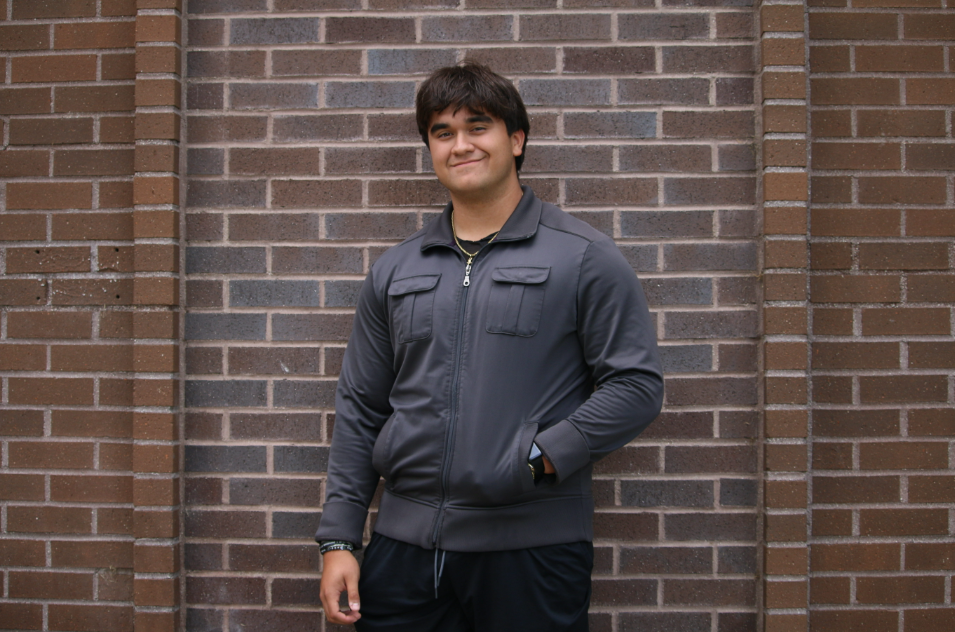
Senior Ian Chung agrees with Raddatz.
“I started collecting vinyls these days because I began recognizing that aspect of genuinity,” Chung said. “I think, or at least from what I’ve seen, the people who collect like vinyls and DVDs seem more genuine in what they do.”
THE FUTURE OF A BACKWARD TREND
But the trend doesn’t stop there.
As a matter of fact, more students have begun converting to older-generation methods in their daily lives, junior Aziza Mojarro said.
“I’ve noticed a lot of people switching to wired earphones or outdated iPhone models,” Mojarro said. “It’s really interesting because those are I guess less comfortable than what’s out there, but we still want to use them.”
Flores said he believes the trend will persist.
“I think the fascination and vintage trend will continue to spark curiosity for the generations to come and stay relevant with the current content creator era,” the video production teacher said.
Junior Lauren Greenlee said this trend will allow students to live decades they could not live through.
“I think it’s really cool that we’re sort of going backwards now because we get to experience the older generation,” Greenlee said. “Like our parents’ generation, we get to use what they did and relate to the people in the past.”
Wolf said he believes the hype is only temporary.
“Like all fads, it will die out,” he said. “It’s like fashion trends, where after one or two years it cycles into something completely different, and eventually, more people would choose to go back to the more comfortable options.”
But junior Layan El-Djoundi said she thinks the progression of this trend depends on the market itself.
“There’s only so much vintage stuff in the market right now because most are no longer in production,” El-Djoundi said. “If more people get into these mediums, then the market has to replenish these options, otherwise it would be an unsaturated market.”
The English teacher, however, still encourages a return to analog technology in a progressing generation.
“Progress is almost always a good thing,” Wolf said. “Almost.”






Oliver Kim • Feb 23, 2026 at 6:12 pm
Amazing article! I learned a lot about analog technologies through this.