

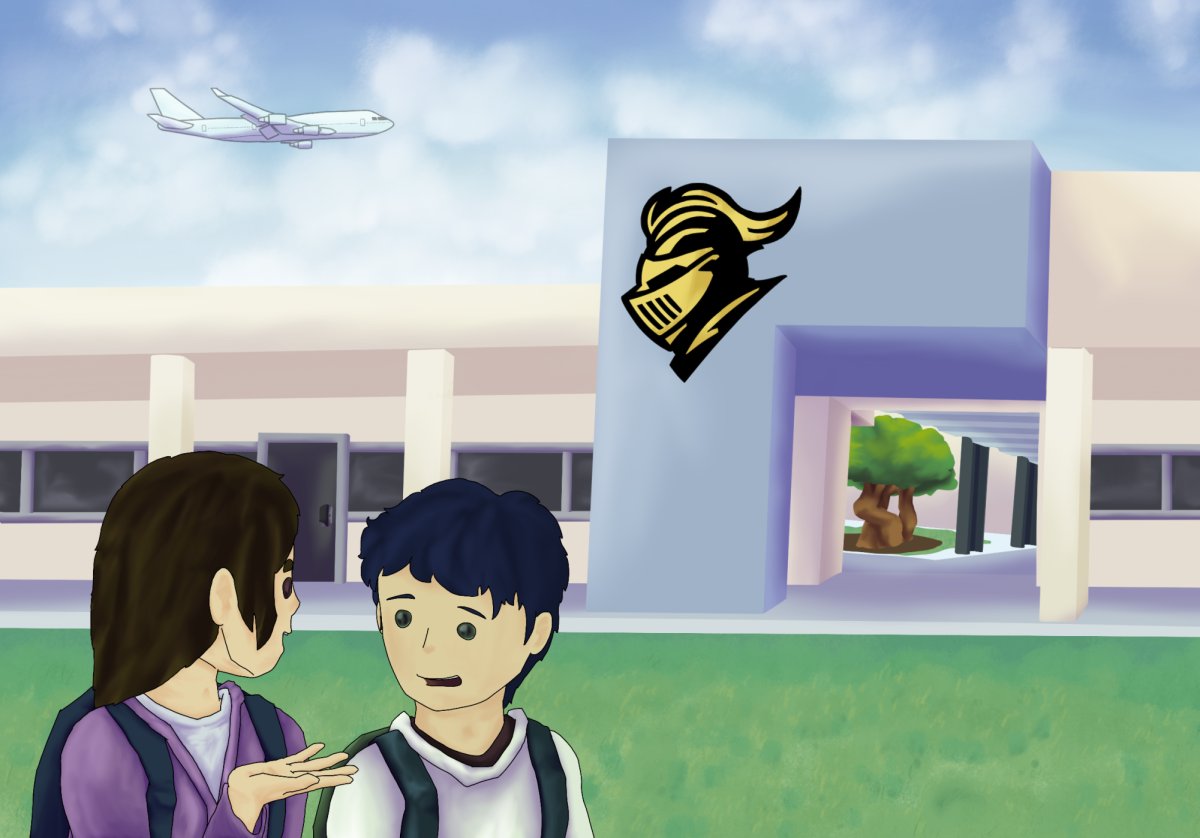
Upon opening the door, one is greeted not by a long hallway, but by the sight of grass and trees. As one looks around, students pass by chatting to one another in English, and rather than a uniform, they are dressed in a variety of different styles.
This is a moment—a distinct sensation—that a Korean student who came to the United States experiences: the difference between Korean and American high schools.
One of the things that makes Sunny Hills unique among American high schools is its Korean student population. Many Korean students come to Sunny Hills for a slice of life in America.
NEW TO THE HILL
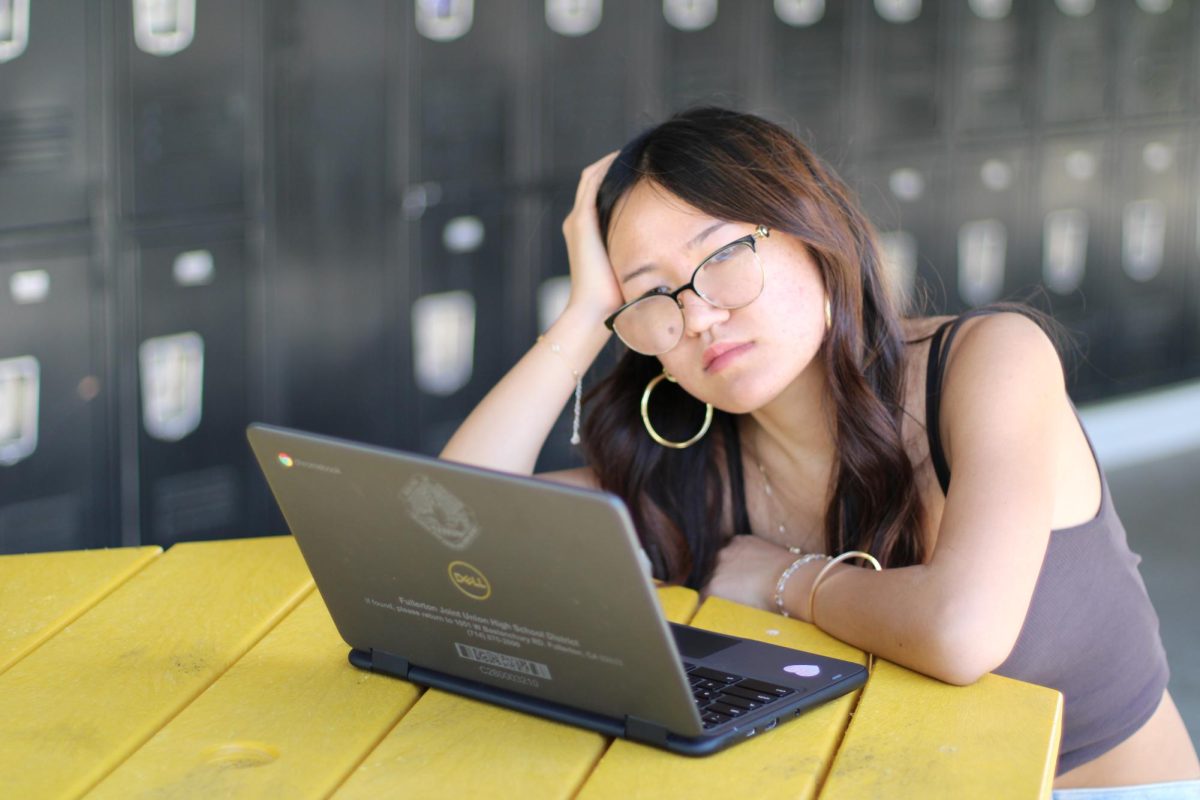
Last summer, Sojeong Han, who studied at the International School Jeju Campus for nine years, decided to come to the United States to search for a new academic environment. Her first impression of Sunny Hills as a Korean sophomore was defined by the unique atmosphere of new surroundings and the new people she encountered.
“In Korea, you feel a certain pressure to conform to the group; here, however, there are so many unique individuals with their own distinct styles, and it feels like those differences are respected,” Han said. “The students’ personalities seem vastly different, too—and as for the teachers, it feels as though I’ve known them for much longer than I actually have.”
Han said that despite her long tenure at the Jeju campus, she had found it difficult to form close bonds with students. Consequently, she said the unreserved, open manner in which Sunny Hills students approached her was one of the positive experiences she has had since coming to the U.S.
“I was probably one of the longest-attending students at [the Jeju campus], yet I struggled to reach out to others—I felt a bit intimidated by the other kids,” Han said. “But here at [Sunny Hills], students greet you and smile the moment they see you, and that was great.”
Although she experienced a welcoming atmosphere at Sunny Hills, the sophomore said she still faced certain challenges.
“Since I just arrived at [Sunny Hills] this semester, I didn’t know a single person here,” Han said. “Plus, this is my first time attending an American school, so I wasn’t familiar with the academic system—which meant that, at times, I struggled a bit with the language barrier.”
While she had been learning English since the age of seven within an international school, her opportunities to use it were limited, Han said. As a result, engaging in conversations in English at an American high school proved to be a bit difficult initially.
However, the sophomore said that she overcame these difficulties by actively reaching out to her fellow students.
“I took the initiative to actively greet my classmates first, and that’s how I started making friends,” Han said. “As for speaking English, I just kept practicing; by simply listening to how [the other students] spoke and trying to mimic them, my fluency improved naturally.”
While she feels more comfortable speaking in Korean, she said that there are times when writing in English feels much more natural, so she frequently switches between the two languages in her daily life.
Sophomore said that she seemed to adapt quickly to Sunny Hills, largely because there was a significant number of Korean students at the school. She is a member of the Korean Culture Club (KCC), though she said that her initial impression was that the club focused primarily on traditional, old-fashioned activities.
Nevertheless, Han said that—even if she doesn’t attend every single meeting—she appreciates the fact that a Korean cultural club exists at the school.
“Just the fact that a school here in the U.S. has a club dedicated to Korean culture—it really does feel good,” Han said.
PURSUING GOLF AT THE HILL
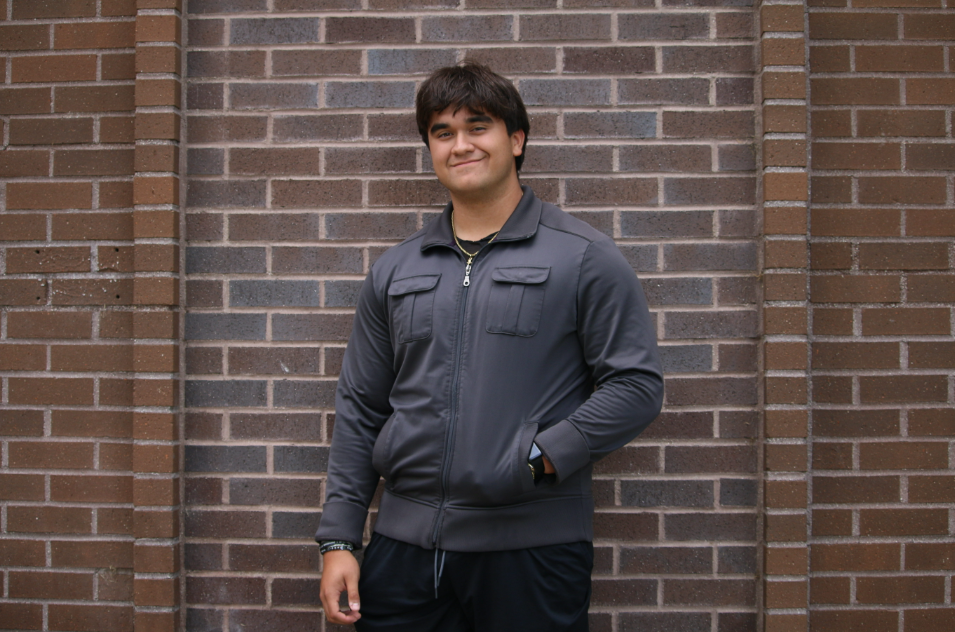
Like Han, Troy Kwon transferred to Sunny Hills as a sophomore to pursue his sport: golf. He said that the U.S. offered more opportunities and provided a better environment for pursuing his passion for the game.
Now a senior, he adapted to his new environment quickly upon arriving at the school. He said the English Language Development (ELD) classes and the supportive way in which the school community treated international students helped him settle in.
“It really wasn’t that awkward,” Kwon said. “There were a lot of Korean students there, so I think it felt much more comfortable than I had expected.”
Kwon said the International Food Fair and the KCC at Sunny Hills provide opportunities to experience and enjoy Korean culture.
“I think they are really great [events] and clubs,” he said. “They help people like me adapt well, and they also allow people who aren’t familiar with [Korean] culture to get a chance to experience it.”
Kwon said that some of his positive experiences in the U.S. have been the American high school events, such as prom and homecoming, as well as the opportunity to make many new friends.
Living in the U.S., however, Kwon said that he often misses his friends back in Korea. He said that during school breaks, he occasionally travels to Korea to meet up with friends, hang out, enjoy local food, and go shopping.
Kwon said he wishes Sunny Hills High School would host a ‘sports day’—an event common in Korean schools but rarely seen in American ones. A sports day is a signature school event, typically held in the fall, where students, teachers, and even parents come together to join in the fun.
These festivals feature various activities such as sprints, tug-of-war, obstacle courses, and three-legged races. Kwon said it would be great if Sunny Hills were to organize similar events.
“A sports day—something like that would be really fun,” he said. “Especially doing it all together.”
FROM STUDENT TO KOREAN TEACHER
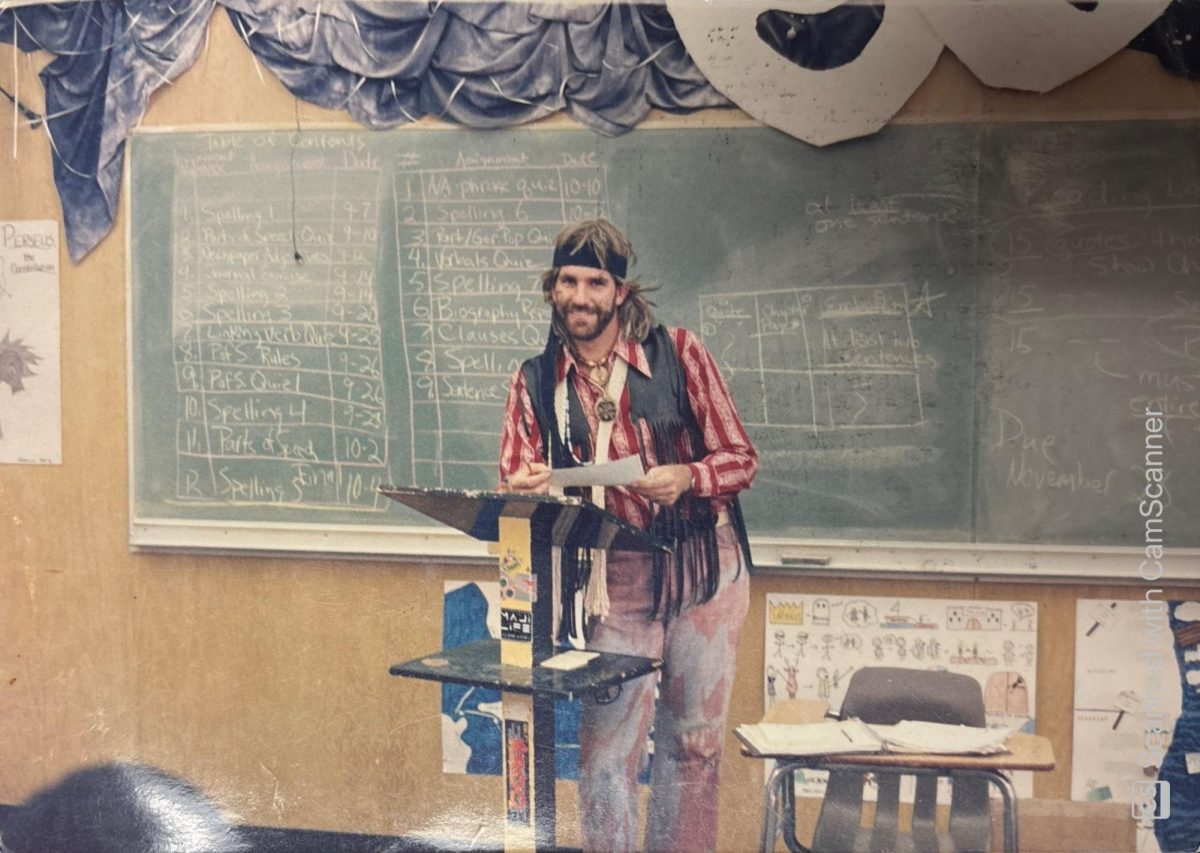
Korean 1 and 2 teacher Esther Lee said that she came to the United States to pursue her education after her father—who was working in American Samoa, a U.S. territory—suggested she move to the mainland. She said that she chose to major in vocal performance, as her lifelong dream had been to become an opera singer.
Lee said that after graduating from Busan Girls’ High School, she dedicated herself to studying English extensively in preparation for entering a U.S. university. However, she said that it took her a considerable amount of time to adapt to her new environment.
“I was afraid to speak English perfectly,” Lee said. “I was intimidated to speak out because I didn’t want to make a mistake, so I only nodded to questions for a long time.”
She said her vocal teacher helped her regain her confidence in speaking English.
One day, while attending a singing lesson, her teacher asked how she was in Korea. She said that while she had been an outstanding student in Korea—and had even felt confident in her English skills back then—she was finding things difficult now because everything here had to be done in English.
In response, her teacher told her that she didn’t need to be afraid; she was free to be the exact same person she had been in Korea and let that true self shine through right here. Lee said that, subsequently, she asked questions and gained confidence thanks to teachers who kindly answered.
Even as time passed, English remained a challenge for her. Although her dream was to become a singer, she ultimately decided to follow her father’s wish and become a teacher instead.
Lee dedicated herself to studying English around 1983 to achieve this goal. As a result, she earned three master’s degrees and, most recently, a degree in education.
Since then, she has taught ELD (English Language Development) classes at Sunset Lane Elementary School and Valencia Park Elementary School.
She said that she refers to herself as “OP” (Ocean Pacific)—a nickname inspired by the fact that the Pacific Ocean lies between the United States and Korea. When she first arrived in the U.S., she struggled to fully integrate into American culture; conversely, she said, when she visited Korea after a long absence, she felt a sense of awkwardness there as well.
Consequently, while teaching ELD, Lee felt a strong desire to share with her students the strategies she used to overcome her own struggles in the U.S., as well as her personal study methods. She said she wanted them to realize that they, too, could become the people they aspire to be.
“I wanted to help [ELD students or newcomers] by sharing how I study and giving them opportunities,” Lee said. “That is my way of helping them, because it is absolutely crucial never to give up.”
Lee taught both ELD and IB Korean at Sunny Hills for ten years, and she currently teaches Korean 1 and 2 classes. She said that she strives to instill in her students qualities such as leadership, a strong sense of identity, self-confidence, bilingual proficiency, and an appreciation for Korean culture.
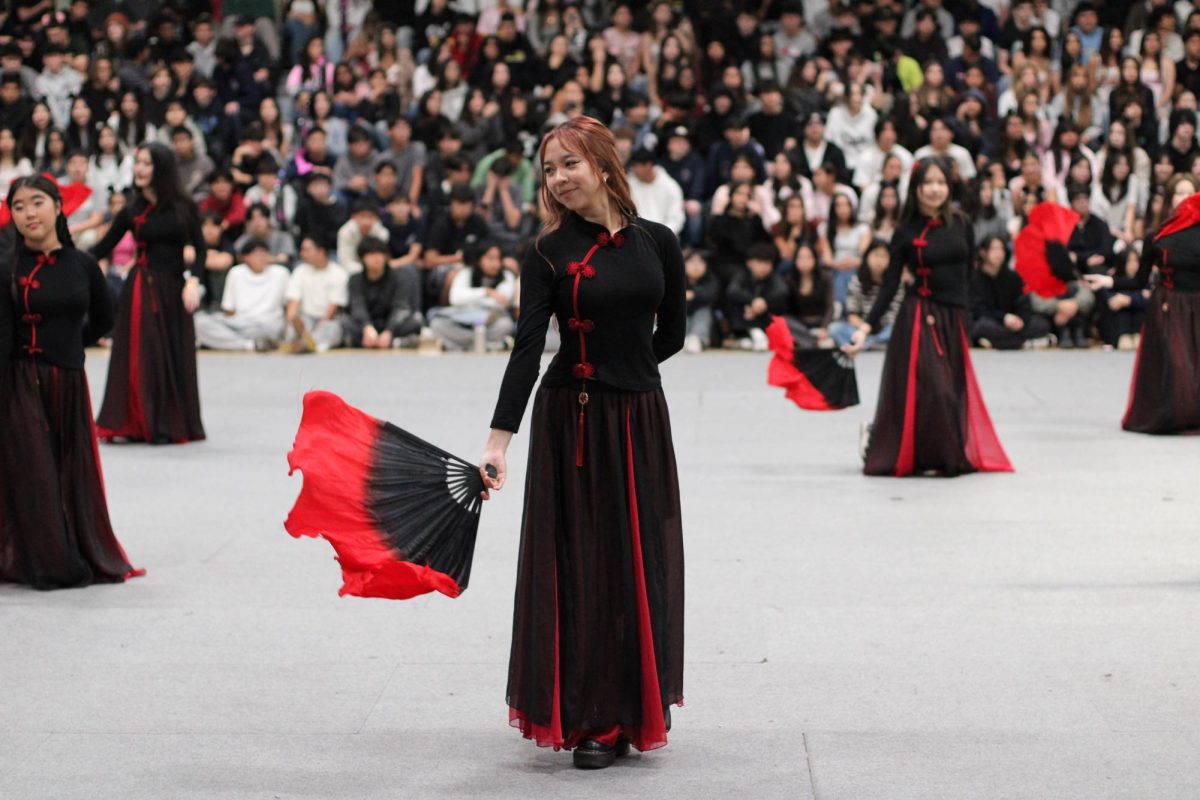
As both a Korean language teacher and the advisor for the Korean Culture Club, Lee teaches Korean culture and provides dance instruction within the club. Furthermore, she shares Korean culture and language with the wider student body by utilizing K-pop as a medium.
“I have a lot of passion for [teaching Korean culture]; if students aren’t familiar with it—such as Korean etiquette—I teach them,” Lee said. “I teach them how to show respect, how to work, and the importance of responsibility.”
Lee said that she welcomes every student who enters her classroom with warmth and kindness. Consequently, she has cultivated close relationships even with her Korean students.
She said that whenever students drop by her classroom during recess or lunchtime, she is the first to greet them with a smile. She welcomes them, offers assistance if they need it—often giving them a piece of candy—and bids them farewell in Korean, saying, “Goodbye” (Annyeonghi gaseyo), as they leave.
“I appreciate it when [the students] come to visit and when they leave, so I love having the kids around every morning,” Lee said.
A NEW HOME ON THE HILL
And as for me, I came to the United States because my parents wanted to live with grandparents, who were already residing in the U.S., and for a better academic environment. Before coming to America, I lived in the Philippines for four years—starting in 2013—alongside my mother, older sister, older brother, and younger sibling to become accustomed to the English language.
Once we were ready to head to the U.S., we returned to Korea to pack up all our belongings and say our farewell to our relatives; finally, in late December 2017, we arrived in California. When I began attending Whitaker Elementary School as a third-grader, I still felt awkward in my new surroundings because my English was not yet fluent.
Fearing that I might make mistakes when speaking English, I often chose to remain silent and tried my best to avoid any situations that required me to speak. Consequently, I disliked giving presentations in front of other students or participating in collaborative classroom activities.
What ultimately helped me adapt to school was the ELD (English Language Development) classes offered at both my elementary school and Betty Middle School. In these classes, I learned additional English alongside other students who were in the same situation as me; the basic conversation and public speaking lessons helped me overcome my shy nature.
In particular, my ELD teacher at Beatty Middle School, Mrs. Young, transformed my perception of school from a place of anxiety into an environment where I could learn comfortably and truly enjoy myself. She welcomed me every single day as I entered the classroom, and her advice that making mistakes is simply a part of the process of growing and improving was incredibly helpful to me.
As I arrived at Sunny Hills as a ninth-grader, I felt quite nervous because I had to adapt to yet another new environment; however, as I settled into the school routine and got to know my teachers and new friends, I came to enjoy my time there.
Although I typically shy away from making challenging choices, I enrolled in the IB program and a journalism class in my junior year.
Currently, through my IB and journalism studies, I am gaining a deeper understanding of the world and the people within it. No longer do I avoid English out of fear of its difficulty; instead, I now use it as a tool to connect and interact with wonderful people.
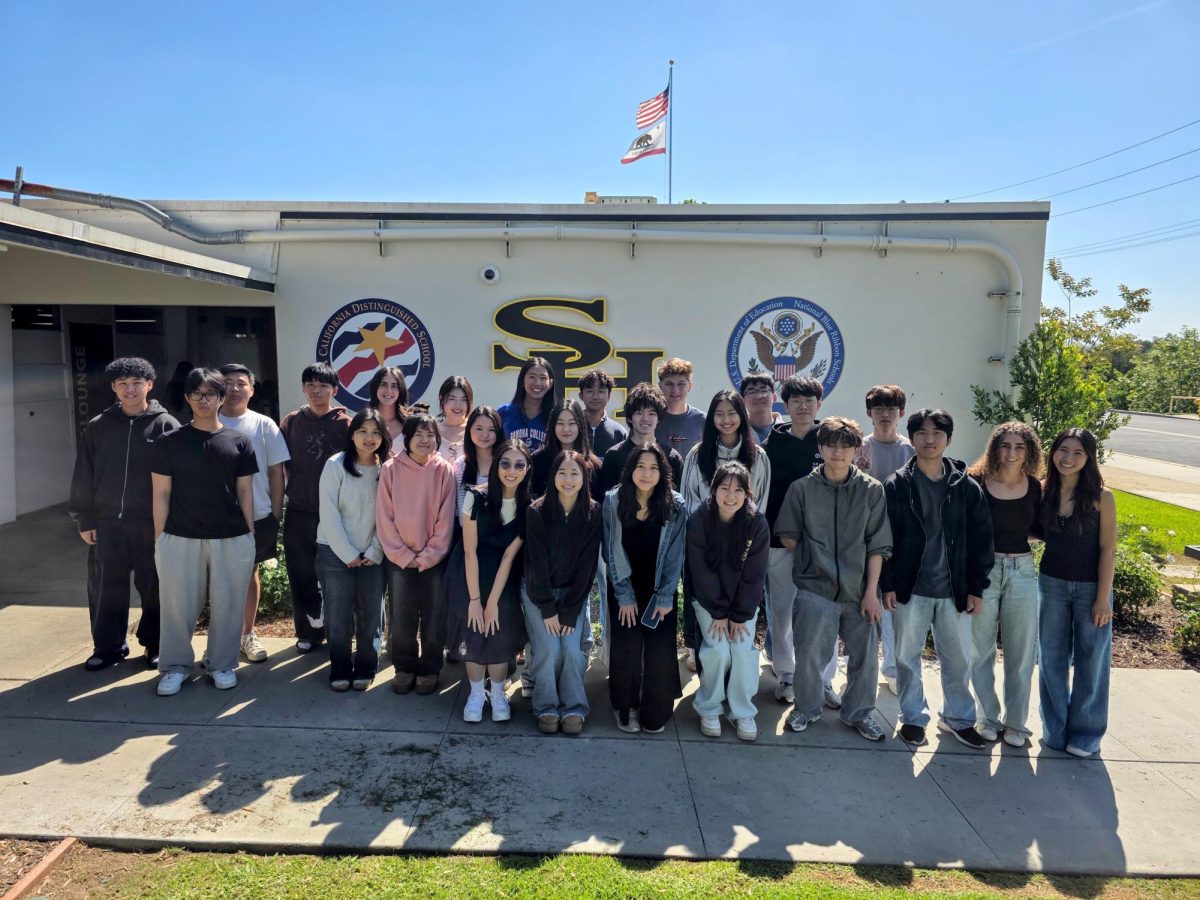
Many students like me blend within the Sunny Hills community, creating a distinctive mixture of Korean and American culture.