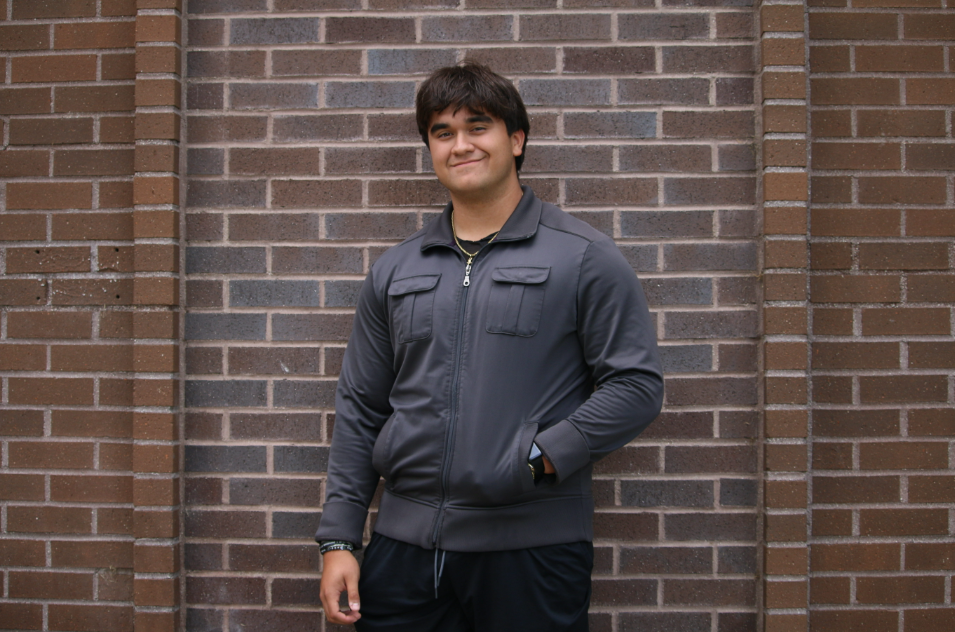



On the morning of his algebra test, freshman Anthony Diaz laces up his red Jordan Airs and goes to school with confidence that they will bring him luck for his upcoming exam.
“It boosts my confidence and makes me feel as if I will do better on the exam,” Diaz said. “I know it’s not the highest grade, but I got a C for the first time I wore these shoes on the day of my test, which is a lot better than I normally do, so now I just wear them before big events.”
Like Diaz, many SH students rely on superstitions, such as rituals, objects or traditions, to navigate uncertainty. From ancient to personal, superstitions continue to shape how students approach everyday life, giving them a sense of control when results feel unpredictable.
BIRTH OF A BELIEF
According to a blog published on May 26, 2012 by Dr. Rajiv Desai, superstitions are irrational beliefs or practices resulting from ignorance or fear of the unknown.
“The validity of superstitions is based on belief in the power of magic and witchcraft and in such invisible forces as spirits and demons,” said Desai.
According to Psychology Today, these beliefs form when a person links a specific action to a successful outcome, a process known as the illusion of control, which can lead to repeated behavior without a definite connection. They emerge from a psychological need to feel control over uncertain events.
When someone associates a behavior with a good outcome, they may repeat it even if there’s no cause-and-effect link.
The earliest superstitions started over 5,000 years ago with the belief in the evil eye — the idea that an individual can look at someone with jealousy or malice and inflict evil upon them.
Although an ancient belief, senior Sarah Sandoval said she still believes in the evil eye and fills every corner of her house with them.
“The evil eye is a very big thing in [Mexican] culture, and ever since I was little, my family brought me evil eye bracelets or hung them up on our porch to protect the house,” Sandoval said. “I think that the energy that people put out into this world and onto other people is a lot more effective and spiritual than people think, and we need to protect our energy.”
Even today, beliefs in rituals and charms still exist and are a part of people’s everyday lives.
In a May 2022 YouGov poll, 28% of Americans said they believe in making a wish while blowing out birthday candles — one of the more common “good luck” superstitions — and 12% of respondents said they always or frequently carry a lucky charm.
Superstitions may even involve numbers, such as in China, where the number 8 is associated with wealth, prosperity, success and status, according to an October 2020 article by Italian-Chinese Institute. In Chinese, the number sounds like “Ba,” which is similar to “fa,” which means to make fortune.
“The number eight has been a part of my beliefs for a while, especially because it’s a part of Chinese culture in China,” senior Ting Han Chan said. “Every time I see the number, it makes me feel more confident and ready for the day, even though I don’t know if it actually changes anything.”
THE PSYCHOLOGY OF RITUALS AND BELIEF
Experts say that what looks like “silly luck” is actually rooted in psychology. Rituals provide a sense of control when the outcome feels uncertain. One study from the Journal of Applied Sport Psychology found that superstitions can increase self-efficacy — the belief in one’s ability to succeed — even if they don’t directly improve performance.
Advanced Placement Psychology teacher Greg Abbott said that these beliefs come from our tendency to misattribute causes.
“Things happen for causes, for reasons, not supernatural reasons,” Abbott said. “People think their success had to do with whatever they had done just before their successful event, so they’re trying to make it happen again; but superstitions are a waste of time, because superstition isn’t the cause.”
The teacher added that stress often drives these habits.
“People with high levels of anxiety are more likely to be superstitious,” he said. “These are usually people who really want to do well in life, but they’re just getting the causes wrong.”
SH school psychologist Isabel Hernandez offered a similar perspective.
“My guess would be that students get anxious and the rituals help them perform better,” Hernandez said. “Superstitions give us a sense of control during uncertain situations; some people believe in luck and may have a ‘good luck charm,’ which in turn can boost confidence.”
But Hernandez also said that stress relief is the main cause of superstitions.
“They could be used as a coping strategy that hopefully leads to a great outcome,” she said. “By eliminating some of the anxiety one feels, performance can become the main focus and therefore be a success.”
Although people logically know there is no connection, this stress-relieving power is why they repeat superstitious actions. Abbott said this is partly due to reinforcement.
“Remember B.F. Skinner? He could make pigeons superstitious by randomly rewarding them for odd behaviors: they thought their wing flap or head tilt caused the reward,” the teacher said. “Humans are wired the same way — we repeat things that ‘worked,’ even if it wasn’t the cause.”
SUPERSTITIONS ON THE HILLS
Even at Sunny Hills, the ancient need for control still shows up in daily rituals. For some, that means food.
“I always make sure to eat the same pasta before I play so I can get all the carbs from it,” said senior baseball player Dylan Erikson, who first ate pasta on the day he pitched five innings in one game against Sonora High School. “Eating the same food just gets me in a good mood before the game.”
Junior Jayden Lee listens to the song she’s performing before every dance, a ritual she has been following since freshman year after listening to Snap Your Fingers by Sean Paul before a football game.
“I don’t really know the science behind it, but it helps my performance,” Lee said. “Practicing this superstition just boosts my confidence.”
Some practices are also common in Korean families.
For example, Lee said her mom encourages her to fold dumplings carefully.
“She always tells me that if I make them look good, my future children will look good too,” Lee said. “So every time we make them, I knead the dough and shape the curves carefully.”
Outside of the kitchen, rituals creep into classroom life. Some students said wearing the same lucky bracelet on the day of important tests boosts their academic performance.
“I usually wear a lot of bracelets on the day of big events or an important test,” freshman Amayah Vine said. “One day I didn’t wear a stack of bracelets on an exam and I didn’t do as well, so after that, I just kept wearing them.”
For senior William Weimholt, luck lies in small, everyday moments.
“If I pick up a penny on the ground and it’s on heads, I feel like I’ll be lucky for the rest of the day, and vice versa if I see it on tails,” Weimholt said. “It’s a silly thing I do, but whenever I see pennies on the ground, I get excited to see what my day will look like.”
However, sophomore tennis player Vannia Pacheco said her belief isn’t in certain objects like bracelets or shoes. She sees signs of good fortune in nature.
“I would say my superstition is that animals like squirrels and butterflies are good luck because they bring me happiness and calm me down,” Pacheco said. “I’ve believed animals were a sign of good luck for a few years now, and it mostly started because the tennis center I would play at was next to a park, so I would see squirrels and a lot of insects, and I just started associating them with good luck, and it gave me confidence when I was playing.”
For students like senior Jasper Hanrahan, superstitions arise in supernatural forms.
“I always hold my breath when walking through graveyards to avoid evil spirits,” said Hanrahan, who followed his dad’s beliefs since he was 10 years old. “It might sound silly, but I feel safer and more in control when I do it.”
WHEN LUCK BACKFIRES
While superstitions can calm nerves, they can also create stress when broken.
Erikson said that missing his pasta ritual unsettles him.
“Some days I don’t get to eat pasta because I get called out of fifth period early, so that mentally throws me off my game,” he said. “I still keep my mentality about my superstition strong, though.”
Abbott warned that dependence on rituals can damage self-assurance, and superstitions can contribute to obsessive thinking.
“Superstitions help your stress go down a little bit, but they can add up to the point that they cause low-level stress all the time,” he said. “That’s when it becomes like OCD [Obsessive-compulsive disorder] — where you think, ‘If I check and recheck my lock 50 times, nothing bad will happen,’ but in the long run, superstition causes a lot more suffering than it helps with.”
Both Hernandez and Abbott emphasized healthier alternatives like practical preparation and understanding real causes.
“Real-life coping strategies such as studying or practicing are healthier,” Hernandez said. “[This is because] if one begins to depend on superstitions and can’t perform if it’s not available, this situation can lead to damaging self-confidence.”
The latter said that understanding the actual causes of events prevents people from relying on superficial methods.
“It’s much better to know the real cause,” he said. “Once you know the causes of things, then superstition can go away.”
Although students may rely on rituals to calm nerves, Hernandez said they can serve benefits when used wisely.
“They could be used as a coping strategy that hopefully leads to a great outcome,” she said.
Erikson echoed this idea, saying that his own superstitions boost his focus and confidence.
“Even if there’s no scientific proof, following my lucky pasta routine helps me stay calm and perform my best,” he said. “It gives me a sense of control when things feel uncertain and puts me in the right mindset to succeed.”