


The Accolade Editorial Board voted 17-3 in favor of Senate Bill [SB] 640, which grants seniors who meet the GPA requirements automatic admission to select California State Universities [CSU], as the legislation improves access to higher education and increases academic flexibility.
The overwhelming pressure of senior year is no secret.
After four excruciating years of late night studying, maintaining grades and juggling extracurriculars, the final stretch of high school all comes down to one thing: college applications — a daunting process that, more often than not, obscures the true goals of higher education.
Yet, with Gov. Gavin Newsom’s passing of SB 640 on Monday, Oct. 6, 16 of the 22 CSUs have turned the tables — offering qualifying seniors letters of admission before they even submit their applications. With its promise of college acceptance through its Direct Admission Program, SB 640 eases the stress and uncertainty of the application process and opens the doors to new academic opportunities.
Signed into law by Newsom in hopes of addressing the declining enrollment at many CSU campuses, the bill does not alter the standard requirements for admission:
- Students must complete A-G course requirements
- Students must maintain a minimum GPA of 2.5
- Students must earn a high school diploma or equivalent
Instead, SB 640 improves the college system’s communication with students.
Starting on Wednesday, Jan. 1, participating high school districts and agencies must upload students’ transcripts to CaliforniaColleges.edu. If a senior meets the criteria for the Direct Admission Program, they will be flagged by the system and receive a letter notifying them of their eligibility. Recipients who then fill out the CSU application will be guaranteed acceptance to their selected campus.
Upon hearing about the new bill, college and guidance technician Genesis Perez said the new legislation is a good opportunity to increase students’ interest in applying to college.
“Knowing that there are schools out there that are going to let you know, like, ‘Hey, you’re in, but you still have to do the application process,’ hopefully that’s a motivator for students to continue being four-year bound,” Perez said. “And if it wasn’t a thought, maybe now start considering, ‘Oh, OK, I have an opportunity with this four-year institution,’ so hopefully it does open doors to students if they weren’t thinking of applying to a four-year school.”
The CSUs are public schools partially funded by California taxpayers’ money, so it’s only fair for us, California residents, to reap the benefits. Students who may have previously been unaware that they are qualified for a CSU can now confidently pursue the education they deserve.
“I think that that’s a huge factor as to why students don’t apply to the four-year because of that stigma,” Perez said. “But I think, again, if the bill is going to do what the purpose is in terms of opening doors and letting students know beforehand, I think that we should be able to see a rise in applications to [CSUs].”
However, despite these benefits, some argue that the legislation may limit opportunities for students who hope to attend a specific one of the 16 campuses. With more students eligible for admission, competition for available spots could increase, as high-demand campuses and majors will still require additional admission requirements according to the CSU website. To put it simply, SB 640 may reduce the probability of admission for students who wish to attend a particular college.
But, it is important to note that students who are not admitted to their first-choice campus are still guaranteed a spot at another CSU. In this way, SB 640 ensures that all eligible California high school seniors have the opportunity to pursue higher education, allowing a larger number of students to access college rather than limiting opportunities.
This isn’t taking opportunities away from other students — rather, it provides qualified seniors with security and reassurance.
Furthermore, from the perspective of college campuses, increased enrollment helps strengthen academic programs and campus communities. This, in turn, creates a domino effect that not only improves the campus’s profile but also enhances the quality of education. Ultimately, this benefits both the students — who receive a richer learning experience — and the university itself, which gains more acclaim as a result.
On a more personal note, by making CSUs more accessible, SB 640 also relieves pressure on high school students and encourages kids to be kids. Especially today, where we as students feel the constant need to outperform our peers to get into a “respectable” college, this bill directly contests this toxic mindset and serves as a reminder that higher education is our choice to make and pursue — not something that is reserved for the “elite” or “overly achieving.”
Deciding to pursue higher education should be a path we choose for ourselves, and by guaranteeing admission to qualified students, SB 640 makes that choice a little easier. After all, senior year should be a time to celebrate both our growth and the exciting opportunities that lie ahead.
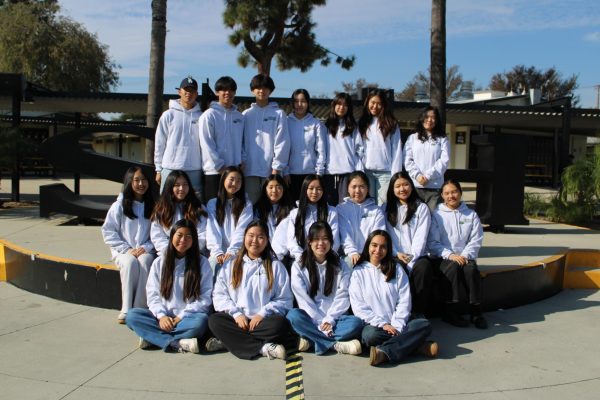
The Accolade Editorial Board is made up of the top editors and section editors on the 2025-2026 staff, with the guidance of adviser CJ D’Innocente. If you have a question about the board’s decision or an issue for the board to discuss and write about, please send an email to [email protected].