


“She won’t talk.”
As my second-grade teacher situated my parents by her desk and expressed her concerns, I stood afar, staring blankly into the fish tank by the door.
I saw many breathtakingly beautiful creatures, which I lacked the knowledge to classify, some with rainbow scales and some with mermaid-like tails. There also were popular ones like Nemo. I loved to gaze at all of them during class, in awe, and in envy. Fish, I realized, are loud in color and in behavior. But I was the opposite. Silent and dull — like a hard-shelled oyster.
“It will be difficult to keep her in class.”
That was my last day at Wilton Place Elementary School and my last day with those fish. My parents assured me that it wasn’t my fault, but I wasn’t dumb. They took me to some “special hospital,” where the doctor asked my parents weird questions like, “Does she talk at home?”
But then came the results, which I learned years after the diagnosis: I had selective mutism.
The speech impediment, my therapist explained, came from multiple factors, such as my inherent introvertedness and anxiety in social settings. But within myself, I knew that my problem was rooted in a deeper problem: pointlessness.
Like suggesting an idea for a group project only to be disregarded, or bringing up dinner plans that go unheard — when you feel your words reach a wall, your motivation to speak dissipates.
Believing a change in environment would help, our family moved to Fullerton from Los Angeles. But I refused to open my shell of silence because I thought it would keep me safe from any potential disregard. So at Robert C. Fisler School, I was once again termed the “mute kid,” with kids often whispering, “Why can’t she just talk?”
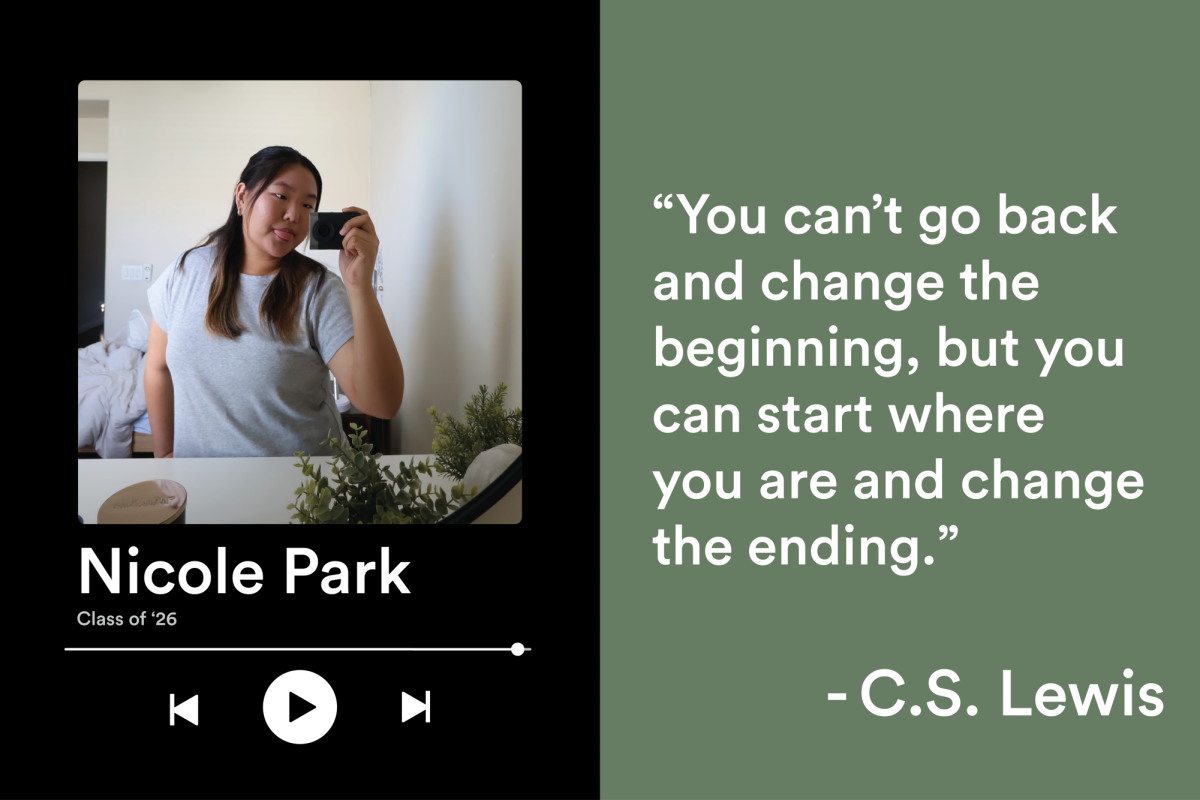
High school, I thought, would be the same. But on the last day of freshman year, I followed my friend and now editor-in-chief Nicole Park into Room 138 to be met with a classical interior that screamed “All the President’s Men.”
Then-adviser Tommy Li came out of the room, asking Park to recruit more people to take journalism. And I, allured by the old computers and newspapers taped to the walls, impulsively spoke out five loud words.
“I’ll see you next year.”
At that moment, I panicked, thinking I was getting myself into an inescapable responsibility. But looking back, it was those five words that completely transformed me and my high school experience.
In journalism, I had to write all of my thoughts down because a story would not be complete without the details. And I had to go out of my comfort zone and interview different people, from a student athlete to the campus supervisor. At first, I hated it. I hated writing columns and editorials that would let my thoughts be known. I hated interviewing strangers and being awkward with them.
How could I ever articulate their lives when I can’t even articulate myself?
But after writing a column on the Paris 2024 Summer Olympics, I realized my thoughts carried more passion than I imagined. When that story earned me a second-place recognition for the California Press Women Award, I learned that those thoughts were never pointless.
Then, when my story about our campus supervisor, whom I conducted several awkward interviews with, was selected as Best of SNO, I realized that my ears that listened and my words that completed articles told stories that could be heard.
Every word I selected, every sentence I curated and every story I crafted reached someone. Not a wall, but an individual who could voice their lives and opinions through my articles.
Journalism opened my shell and taught me about my pearls — my words.
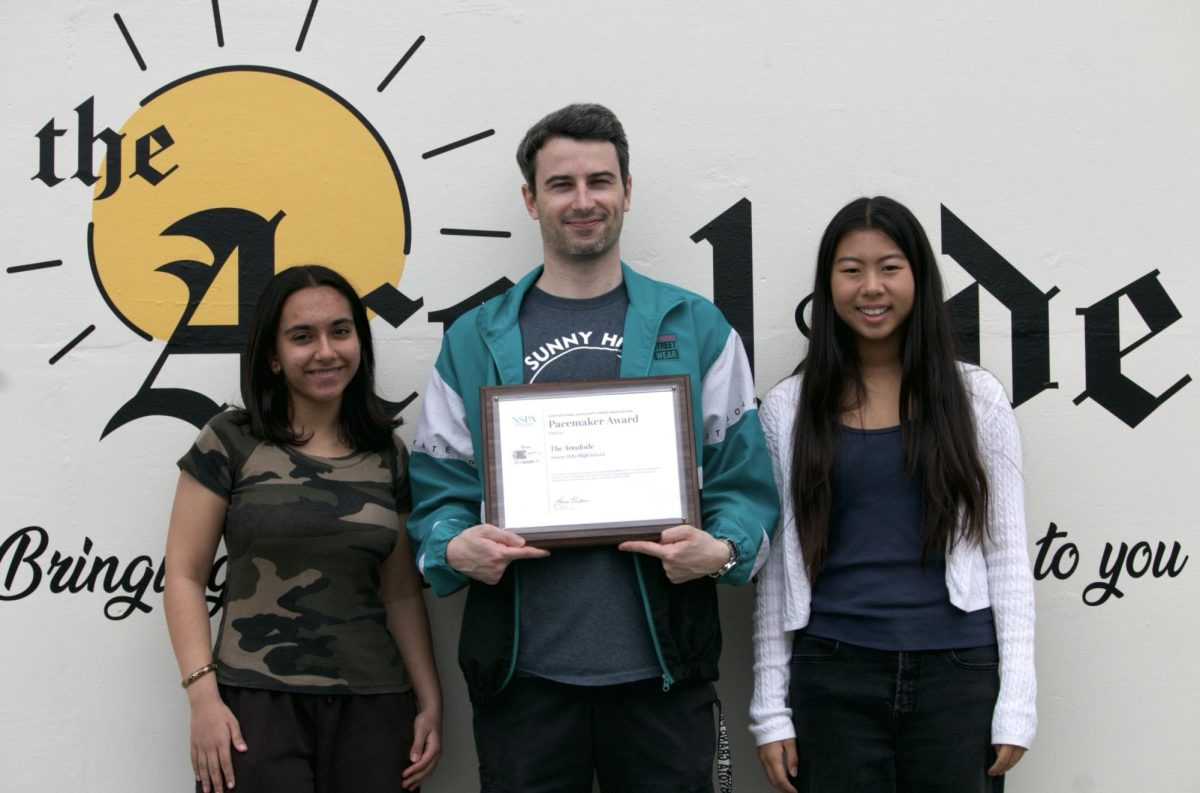
The once-indestructible self-doubt that made me resort to silence was destroyed. Becoming a part of our news publication has taught me how to express myself and hold conversations, and I forever thank our advisers, Li and C.J. D’Innocente, and every Accoladian I have worked with for breaking me out of my shell.
So, I may not be an extravagant, loud fish.
But I will continue to be the quiet — not silent — oyster who listens, writes and tells stories that will ripple somewhere.