

I learned to balance my days by splitting them into two — early afternoons holding Biology club lectures on cell regulation and late nights in Room 138 editing leads for The Accolade’s quarterly magazines. Each space asked for a different version of me, and for too long, I felt forced to choose.
As a baseball fanatic, I would describe my decision to join Journalism 1 in freshman year as a curveball: out of the ordinary and a choice that diverted (greatly) from the path I planned for myself.
Growing up, I’ve always felt most drawn to the sciences, immersing myself in Robot Nation competitions as an elementary school student and feeling comfortable with scientific formulas.
In this world, I wasn’t required to interact with others.
However, this comfort soon began to feel uncomfortable; as an antisocial eighth grader preparing to take on high school, I realized it was time to stop hiding behind the reassuring numbers and find my voice, a skill I would need to navigate through the bigger opportunities I’d be met with in this stage of my life.
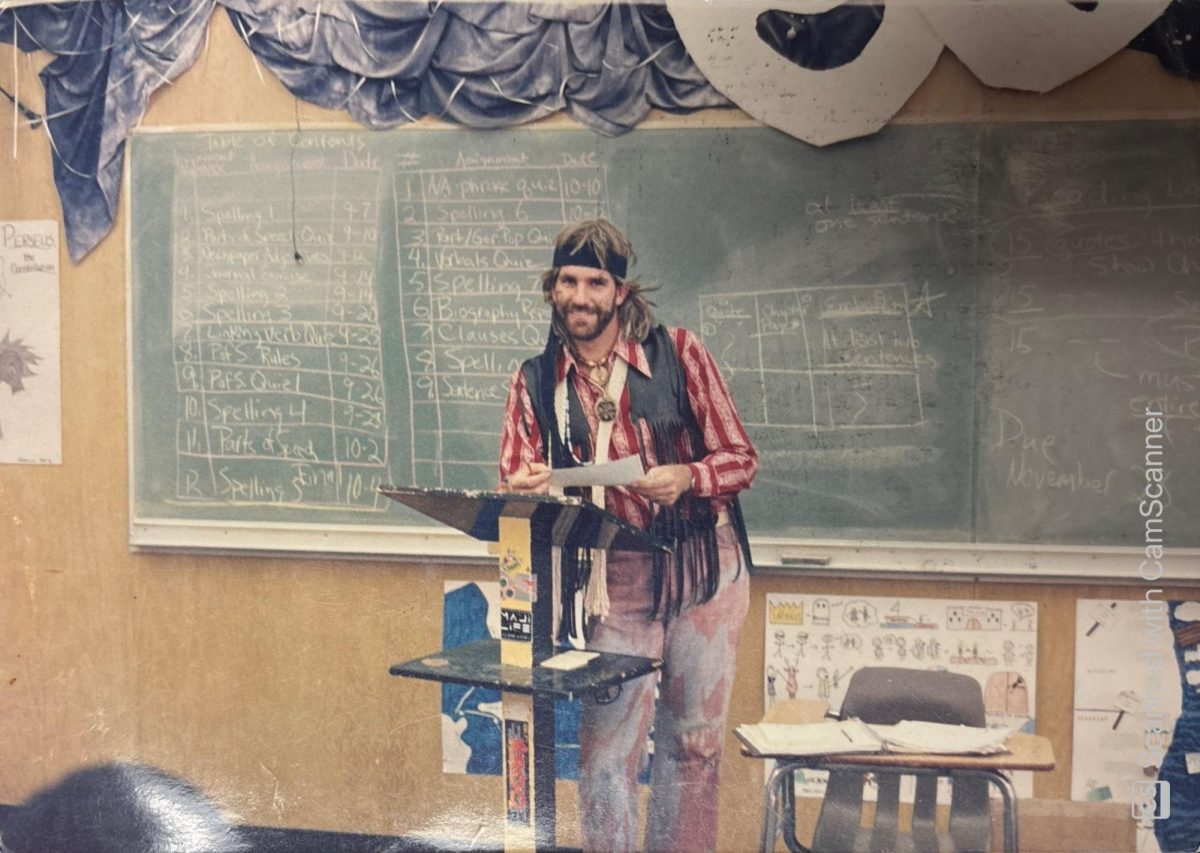
My solution? Then-Accolade adviser Tommy Li’s Journalism 1 course.
Journalism, as I understood it four years ago, was writing news while interviewing strangers — simple and out of my comfort zone.
I was used to the straight-down-the-middle fastballs of scientific formulas, where the logic was predictable. Journalism, however, required me to adjust my stance and learn a completely different swing.
Beginning with the field’s history, I spent countless class periods watching films about the Watergate scandal and yellow journalism. Instead of learning to problem solve, I mastered how to ask purposeful questions.
Then came my first story assignment: a Feature story about Constantin Nasonov, a student who moved from Ukraine during the Russian invasion.
Instead of a calculator and formula sheet in hand, I gripped my reporter’s notebook and a never-ending list of questions.
As our conversation progressed, I found myself more deeply immersed in his story, listening patiently as he detailed his childhood in Odessa and how the war reshaped it.
This story served as the pivot point in my journalism journey. It allowed me to discover what the subject was truly about: finding community, asking questions with intention and valuing the quiet details through silent observation and empathy.
Inspired by this assignment and anticipating future conversations, I took my next step and joined The Accolade as a copy editor, eventually becoming the sole Feature editor — seemingly moving further and further from the realm of science.
Since then, through countless lunch periods and after-school conversations, I passionately sought new stories and perspectives.
Now, as an editor-in-chief, I’ve become a confident communicator and leader, especially after learning to navigate our publication without our long-time pillar, Li.
I’ve also perfected the art of balancing. As I united my opposite identities, I realized I didn’t have to choose, despite the doubts I had along the way.
The Accolade gifted me the opportunity to interview medical professionals, including a pediatric neurologist, a clinical fellow and a research scientist. Before I knew it, I discovered the beauty of interdisciplinary studies through scientific journalism.
Merging the analytical rigor of science with journalism’s storytelling was my home run.
As I prepare to move coasts to study neuroscience at Brown University, my journalism career is far from over.
I hope to bridge my love for dialogue and discovery as a writer for The Brown Daily Herald, bringing science to the public while weaving compassion and factual reporting — skills I’ve honed during my time in The Accolade.
Though my initial steps into the world of journalism felt awkward and plainly weird, I realize now that tackling curveballs — life’s unexpected hurdles — is what shapes all great players.