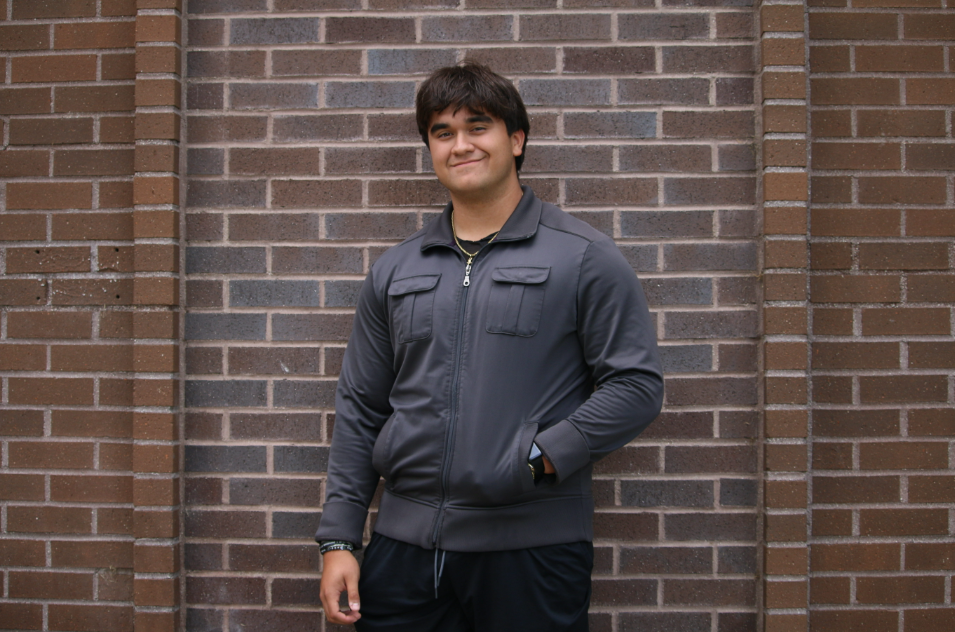



With excitement in the air in anticipation of Halloween and the homecoming dance, Associated Student Body [ASB] member senior Caleb Solis felt the exact opposite.
As part of the technology committee and a part of the second annual homecoming king court, Solis said he was drowning in ASB duties and schoolwork.
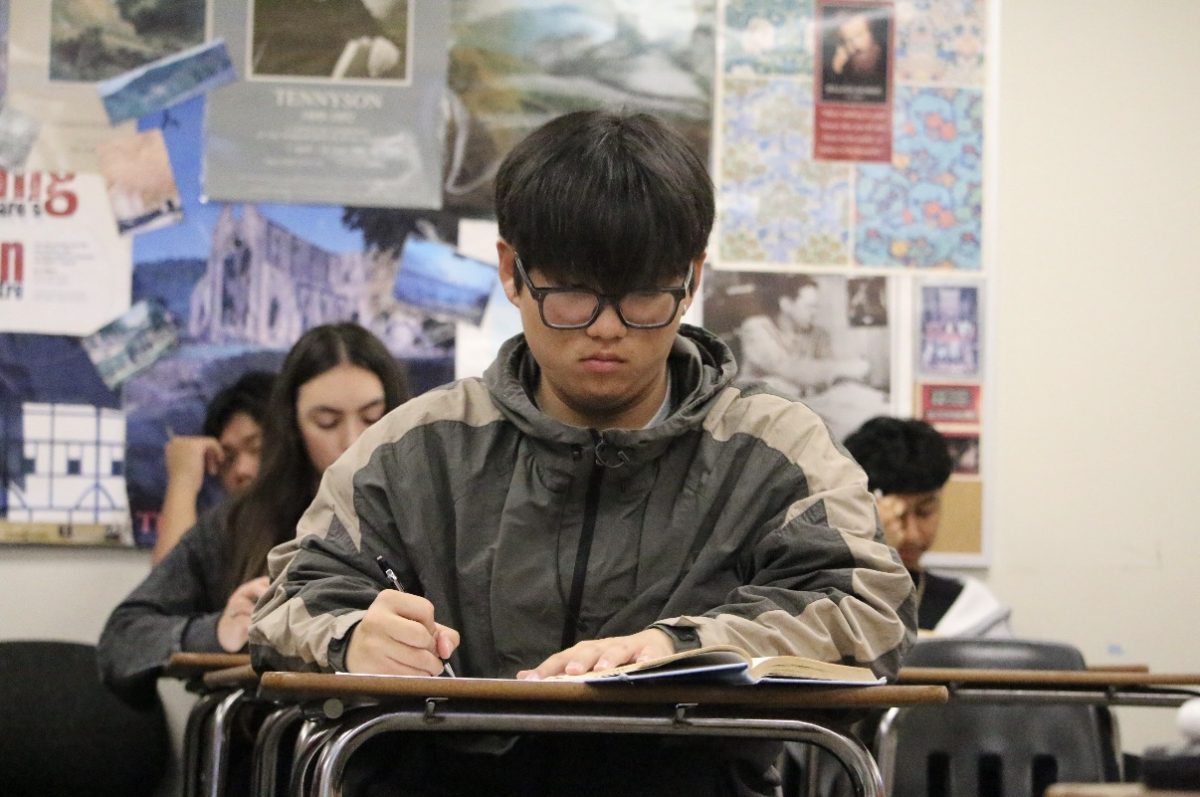
“We had a bunch of homecoming court introductions to film and edited those; on top of that, I was on court, so I had to send in my introduction,” Solis said. “School-wise, I had an AP [Advanced Placement] Biology test, was really behind in AP Government and had assignments for AP Literature.”
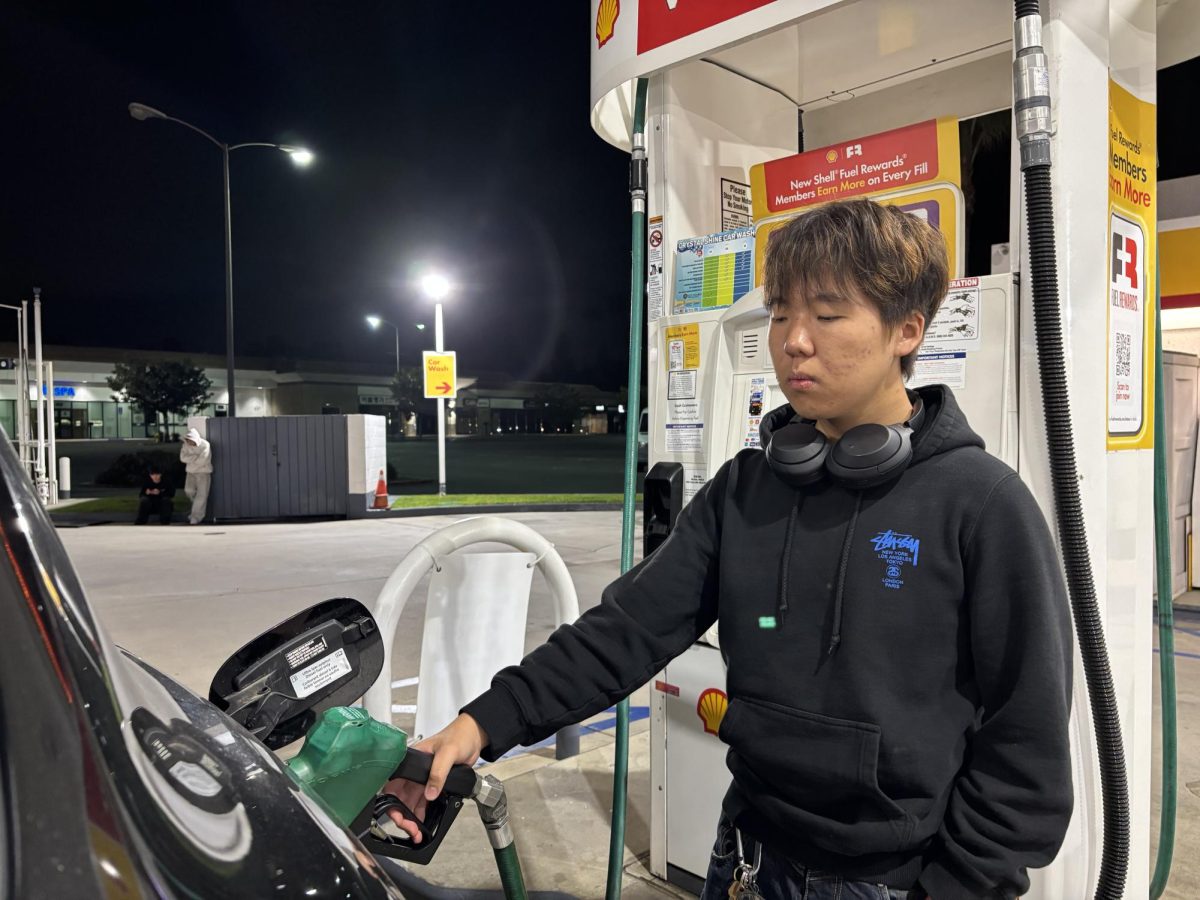
So, on Tuesday, Oct. 28, he resorted to what he believed could help him fuel up and finish his assignments: caffeine.
After buying two Celsius energy drinks after school, he said he drank one but felt even more drowsy.
His solution? Drink the other.
“I was fine for about 40-45 minutes, and then automatically, my heart felt so weird; my breathing was off — I was taking deep breaths, but I felt like the oxygen wasn’t really getting to my lungs,” he said. “And then I started being really jittery, in a bad way, to the point where it just felt like everything was off.”
Scarred from the incident, the senior said he resorted to a four-month break away from consuming such a stimulant.
Along with Solis, Sunny Hills students said they’ve noticed an increasing prevalence of students consuming caffeine through coffee, energy drinks and other beverages, with many attributing the phenomenon to increasing academic rigor as they progress through different grades.
“I definitely have seen the number of students drinking caffeine increase as I’ve gotten higher in grade levels,” junior Melody Sonboli said. “I think it’s just because we’re getting less sleep and because of the rigor, especially with extracurriculars.”
The Accolade contacted Richard Zhang, clinical fellow of Child Adolescent Psychiatry at Yale School of Medicine, and Sarah Clark, research scientist at the University of Michigan, to dive deeper into the effects of caffeine in adolescents and possible reasons behind continued usage.
WHAT EXACTLY IS CAFFEINE?
According to the Alcohol and Drug Foundation, caffeine is a stimulant drug that speeds up the messages travelling between the brain and the body.
The stimulant induces effects like feeling more alert and active, restlessness, excitability, dizziness, headache and a lack of concentration.
On a microscopic level, it blocks the activity of adenosine, which accumulates throughout the day and contributes to sleepiness, Zhang said. But when it’s blocked through something like caffeine, many feel more awake and energized.
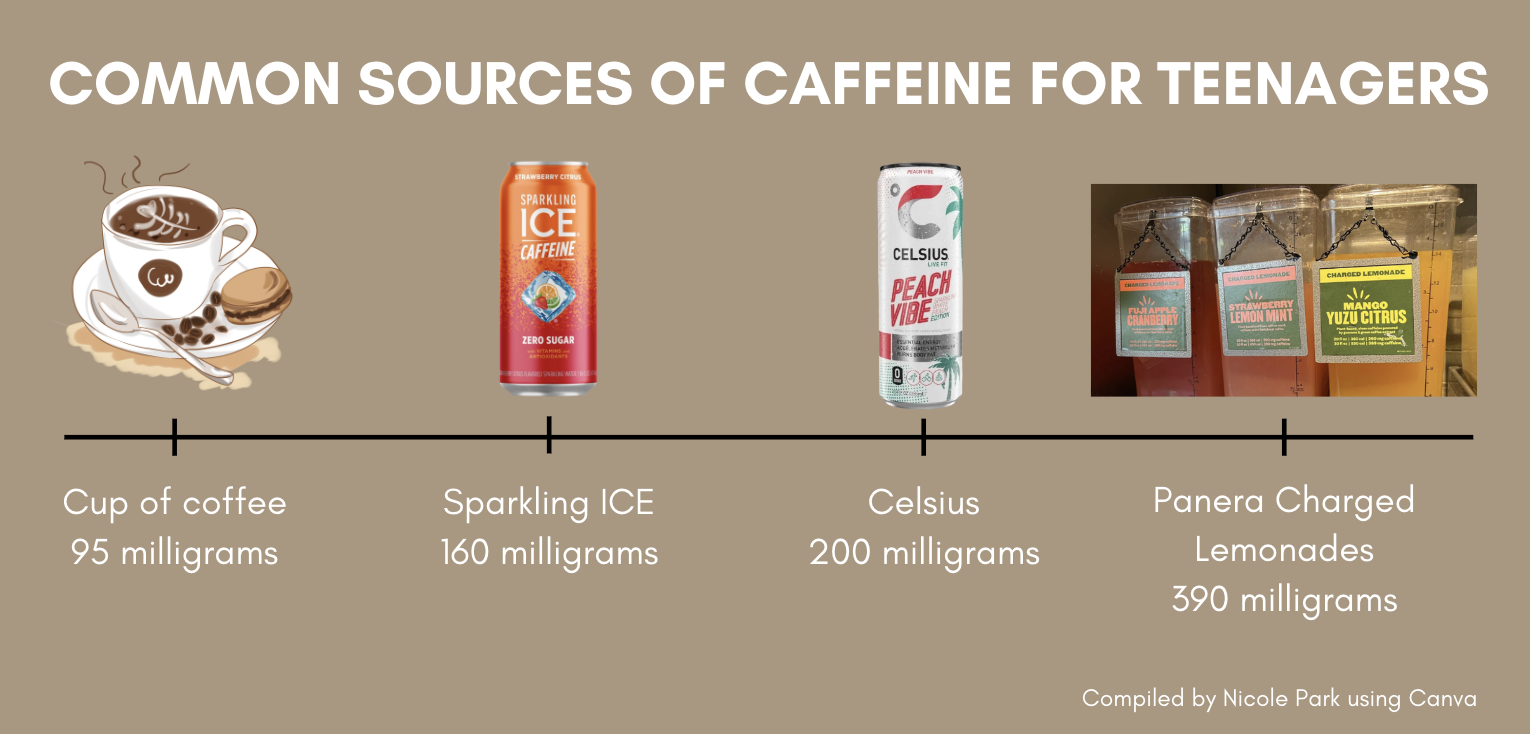
The clinical fellow said this stimulant may affect teens differently than adults over 25 years old, as the recommended daily intake for the latter is about 400 milligrams, four times the amount for the former.
“Teens have very rapidly developing brains, and basically anything that a teen takes at their age has a much stronger impact at that age range than in adults,” Zhang said. “Especially at a younger age, it’s almost as if your brain didn’t fully reach a certain potential for staying focused and so forth.”
Zhang views a slight relationship between caffeine use and stress, anxiety and fatigue in students.
“While caffeine, in and of itself, doesn’t cause burnout, I think that if you’re using caffeine to stay awake overnight and pull all-nighters to study, it’s more so you just didn’t sleep, and that can make you really depleted, energy-wise, which can be a risk factor for burnout as well,” he said.
As teenagers begin to rely more on the substance, it may become addictive, Clark said.
“I think a big way that caffeine masks deeper issues like sleep deprivation is to the person themselves,” Clark said. “They think, ‘Oh, I can do everything,’ and it’s hard sometimes for people to get to a place where they say, ‘It’s okay to put limits on how much I’ll say yes to, how much I’ll volunteer for things like that.’”
Contrary to students’ opinions, 23-year social science teacher Greg Abbott said he doesn’t see a difference in teen caffeine consumption.
“Sunny Hills kids have always been drinking lots of caffeine,” Abbott said. “So when I started, it was before the energy drink craze; but, they drank Starbucks often, so there’s been a lot of caffeine the whole time, honestly.”
Rather than increased academic rigor, the teacher points to marketing and advertising as a factor in teens consuming caffeine.
“It’s commercials, and I’m sure they’re using social media as ways to advertise to kids, and they try to show it as if this is like a hack as long as you can afford these energy drinks,” said the teacher, who cuts off his daily caffeine consumption at 10 a.m. “But, I think it’s mostly junk, and I don’t think it actually improves or wakes you up in that way.”
The trend of caffeinated drink sales on campus says the same or otherwise.
However, like Zhang and Clark, Abbott said he views a correlation between caffeine and stress or anxiety.
“Anecdotally, it does look like when caffeine cuts into actual sleep, then it dramatically brings down all of the things we care about, so we end up being more depressed, more irritable,” he said. “To do well at school, you have to sort of see the value in it and like, if you’re depressed because you’re not sleeping enough, it’s hard to have the right attitude and motivation to enjoy school and enjoy learning.
“But I think ultimately, caffeine is okay unless it interferes with the kids’ total efficiency and quality of their sleep.”
WHY THE BUZZ?
Above all, sleep should be prioritized among the teenage population, Abbott said.
“Here’s the main thing, the benefit that people want to get from consuming these caffeinated drinks, you can get way better from sleep; it consolidates your memories and it highly correlates with a healthy mental set,” he said. “So I think when people, on purpose, sacrifice their sleep over and over and over again and realize they can get by with caffeine.”
Another possible contributing factor to teenage caffeine consumption is peer influence, Abbott said.
“It’s called social scripts; Sunny Hills kids want to go to [University of California schools] and Ivy Leagues, which is great,” he said. “You’ve watched TV shows and seen videos about the grind and all that stuff — it’s a belief system, so I would say peer pressure, that’s probably how it happens.”
Both Zhang and Clark also noted that students can feel obligated to consume caffeine because of their surroundings.
“When you’re a teen, your relations with other people around your age are very important, and when teens see their friends or people of similar age do something like have a coffee, it’s naturally more of a temptation to just model what others are doing,” Zhang said. “That can be one reason for caffeine consumption, just a little bit of fun and just staying with the crowd.”
In addition, they acknowledged the impact of external factors like social media and marketing.
“Sometimes, the advertisements you see on social media platforms are not as tightly controlled as they should be, so I would speculate that it wouldn’t be hard for a certain caffeine company to market to a general social media audience, and teens see that and be like, ‘Oh, it’s a fun-looking drink,’” Zhang said. “On social media, things can also spread quickly and become more and more normal.”
Clark agreed and said the media took a part in normalizing caffeinated beverages.
“In my lifetime, coffee has gone from sort of an older person’s drink to very much a young person’s drink and a social drink, and so I would say that is an example of how caffeine has marketed itself, or products with caffeine are marketed positively,” she said.
However, the scientist said social media also unveiled the dark side of caffeine usage, referring to the 2023 death of an Ivy League student with a heart condition after drinking Panera Bread’s Charged Lemonade, a large cup that contained around 390 milligrams of caffeine — more than cans of Red Bull and Monster energy drinks combined.
“An unintended kind of marketing thing was — and this is what I think made a lot of people pay attention to caffeine — was the Panera lemonade,” she said. “Before that hit, caffeine amounts weren’t so well recognized by people that you would automatically go, ‘Whoa, that’s a lot of caffeine,’ and once there were some pretty serious health situations associated with that, interestingly, the publicity from that has actually prompted not everybody, but a chunk of people, to think about maybe we don’t need these extreme caffeinated products.”
Caffeine consumption may even be a combination of marketing and increased availability of products and places.
“I actually think one of the sneaky things that has happened is coffee shops — whether it’s Starbucks or your local independent shop — they have become very welcoming spaces for teens at the same time that a lot of the other spaces are kind of going away, like the mall or movie theater,” she said. “Even where they exist, sometimes they’re not really very welcoming to teens.”
Though he believes this fact is dismissed, the clinical fellow said that another important aspect to be aware of is underlying cognitive and behavioral disorders in teenagers.
“There are kids who may have a condition called attention deficit hyperactivity disorder who don’t realize it, then that can not be a healthy reason to use caffeine, and their attention doesn’t really get much better, and they feel worse,” Zhang said.
JUST A WAY OF LIFE?
Abbott said caffeine is not all bad for teens and society.
“I mean, there’s nothing necessarily wrong with it; caffeine is part of American culture, and it correlates with productivity, and it correlates with waking up in the morning and grinding hard and sort of all of that, which I get,” Abbott said. “But, the part that keeps you energized in energy drinks is just caffeine, like the rest of it is not scientifically proven, actually, to help.”
In order to function academically, Solis said he has resorted to consuming coffee and energy drinks on many occasions.
“There’s been plenty of times where I just drift off to sleep if I don’t have any type of caffeine, and then that causes me to, like, potentially miss deadlines or any, any other stuff like that,” he said.
When he attempted to cut back after his heart palpitations, his tiredness reemerged.
“Having no caffeine caused me to kind of be lazy, because for me, my tiredness comes after school, so that’s usually when I either drink coffee or have an energy drink,” the senior said. “So not having that, I would just knock out until really late, and then that would cause me to be working on my work way later into the night than I should be and mess up my sleep schedule.”
Despite his constant usage, Solis said caffeine functions as a helper, rather than a substance he feels addicted to.
For junior Samuel Yun, who is involved in the ASB and plays water polo, he utilizes caffeine to boost his efficiency in completing his assignments.
“Well, for me, at least at this point, I think caffeine is necessary for me to stay awake and pay attention during class,” Yun said.
IT’S NOT ALL BAD
Zhang said he doesn’t view caffeine in a fully negative light, noting the history of coffee and coffee shops.
“A lot of coffee shops emerged centuries ago as socialization places, so people in the Turkish or Ottoman Empire would have coffee houses where they would gather together to share wisdom, learn and debate things,” he said. “And in modern day, you see friends coming together to buy a cup of coffee together, and it’s just a good way to socialize, and we know social connection is a good thing usually.”
Similarly, Clark appreciates the fact that many teenagers gather at social places such as coffee shops in the modern day.
“From a societal perspective, I’m happy that we have managed to find coffee shops as an example of a good third space for teens,” she said. “To me, there’s a social positive of when coffee or other caffeine products serve a good purpose, being the sort of the organizer for how teens and young adults socialize.”
With that in mind, Zhang offers a couple of methods for safe and mindful caffeine consumption for teens.
“Just keep it one cup of coffee a day maximum, and it shouldn’t be relied on as a crutch, basically, for anything, at least not anything regularly,” he said. “If one’s trying to reduce overuse, you can replace that can of Monster with a can of something that’s very flavorful but not caffeinated.”
More than anything, he emphasized that substitution is the key.
“If you want something sparkling, tasty and from a long can, is there a non-caffeinated version or similar thing you just substitute with?” he said. “Also, people can find social reasons to hang out for fun that don’t involve caffeine, and you still get the end effect of hanging out.”
Clark also offered some advice for lessening caffeine use.
“If you’re a teen who has caffeine every day — either has a lot of it or has caffeine at the same time — I think it would be interesting to encourage people to just try three days without it,” she said. “You might find substitute products you’d like better and you might find that you get the same boost with a lower amount of caffeine.”
The key to safe caffeine consumption is self-control.
“The benefit of using caffeine in moderation, meaning trying not to have it be a habit, is that when you use it more sparingly, you get a nice lift, and that’s a nice feeling,” she said. “When it gets to be too much, the bad parts of caffeine start coming out, and it’s all negative.
“I know I shouldn’t be recommending caffeine to young people, but honestly, in reasonable amounts, I don’t think it’s harmful.”