


Addictive substances.
Betting on chance.
Tempting experiments.
Many 14 to 18-year-olds find themselves thrust into a world full of more temptations and consequences than they are ready to navigate.
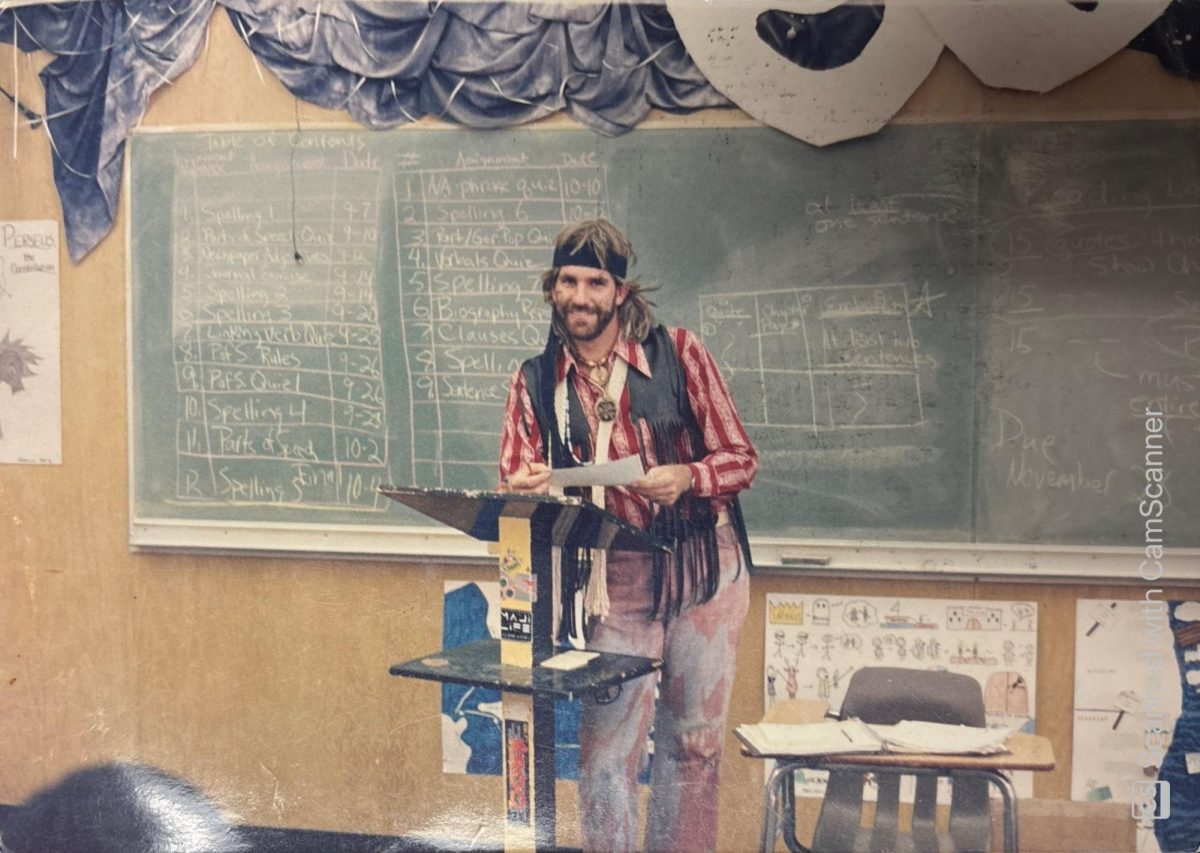
While not a licensed psychologist, social science teacher Greg Abbott said the undeveloped prefrontal cortex plays a major role in impulse control for teens.
“That’s the part of the brain that tells you, ‘You may want to do this right now, but the long-term consequences for this are not worth it.’” Abbott said. “So we’ll have to be smart enough just to think long term, but honestly, kids can’t do it sometimes.”
Considering that the prefrontal cortex doesn’t fully mature until 25, the allure of illicit behaviors can stem from curiosity, peer pressure and thrill-seeking habits.
“As a high school student, I’ve been very open to trying new things because nobody’s young for long,” said a junior, who requested anonymity for privacy. “This has enticed me to try nicotine, marijuana, alcohol, hallucinogens and more.”
According to the UCLA Center for the Developing Adolescent, “if adolescents even think peers may be observing them from another room or online, they are more likely to take risks,” and the “reward response from risk-taking behavior becomes amplified.”
“Curiosity and emotional motivation push me to try new things; however, thinking logically about my safety helps me to draw the line,” she said. “I understand that this may affect me later on, but then again, it’s something that I accepted as part of my experience as a teenager.”
Teens are more likely than adults to explore situations in which “there is a potential for a reward (in whatever form), but the outcome is not assured” because of dopamine, the UCLA Center for the Developing Adolescent wrote.
The “feel-good” chemical has adolescents weighing the thrill of risk against long-term consequences, and often, instant gratification wins.
STEERING CLEAR OF CONSEQUENCES
The allure of spontaneous decisions in adolescents is also strongly influenced by emotional states such as boredom.
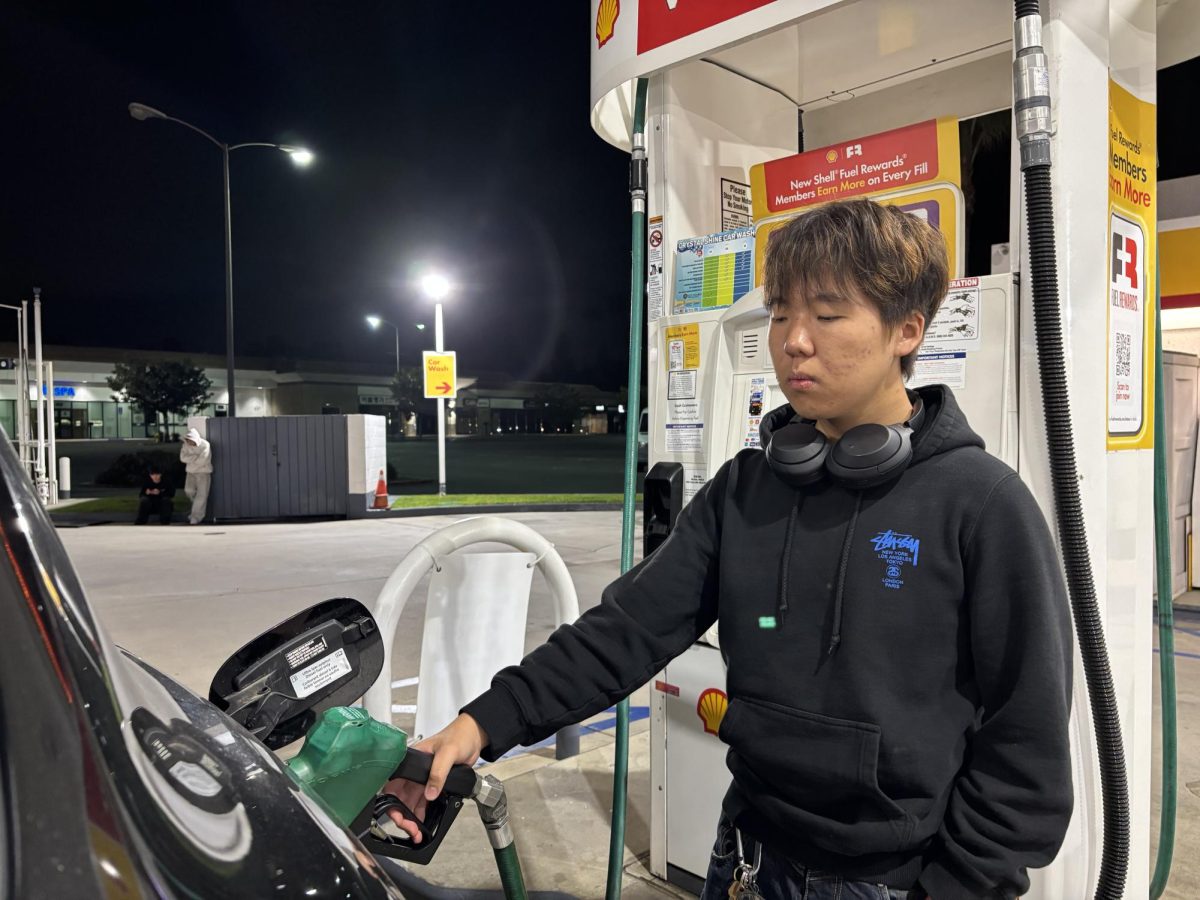
One junior, who was granted anonymity out of caution regarding legal jeopardy, got a speeding ticket in December 2025 for going 31 mph over the speed limit in a 35 mph zone while pulling out of his neighborhood on his way to school.
“It’s not even about getting there quicker, like, I couldn’t really care about getting there quicker,” the junior said. “It’s an adrenaline rush, it’s to escape the boredom.”
The junior said he originally had to pay $500 in fines, but instead paid $300 for a lawyer and had his ticket dismissed after completing an online traffic school class and four hours of community service. He also can’t receive a ticket for the next six months.
“When I first got the ticket, I was driving my Mercedes, but then after I was driving a Tesla, and I started to speed in that too, so then my mom got mad at me again,” the junior said. “Now I’m driving with her in the morning, with her car, but I think she’s going to get annoyed eventually, so I’m probably going to get back to driving.”
He said that he has been trying to be more cautious with his driving lately, but said the allure of speeding will remain with him in the future.
According to the Centers for Disease Control and Prevention, motor vehicles are the “leading cause of death for U.S. teens,” and these “driving behaviors appear to be worse when a male teenage passenger is present.”
“I don’t really see the punishment, which is really bad, but it doesn’t feel that serious yet,” the junior said. “It’s probably because I don’t have a lot to risk right now other than my life, but if I have a family, I’m not going to risk it that much.”
PETTY CRIMES, RISING NUMBERS
According to a story in the Orange County Register on January 18, arrests among juveniles in OC have doubled between 2022 and 2024.
They increased by “2.6% from 32,047 in 2023 to 32,874 in 2024,” with 46.5% arrested for a felony offense, 51.8% for a misdemeanor, and 1.7% for a status offense.
“Most people think that won’t happen to me, like ‘Okay, some people get in trouble for this, but I won’t get caught,’” Abbott said. “Maturity is realizing that everything that happens to lots of people can happen to you.”
One sophomore said he had stolen from Target before, with the most being a hundred dollars’ worth of paint markers.
“When I first stole was around seventh or eighth grade, and I only stole little things like pencils and Tech Decks,” he said. “I just didn’t want to pay for it, [but] I was scared I would get caught and brought into the security room.”
According to character.org, adolescents tend to steal for various reasons, including to gain approval from their peers, seem brave, “to show off,” or even just “for the thrill of it.”
“I usually do it for my friends if they’re too scared, snacks, maybe a few pencils,” the sophomore said. “I just get things for myself that I would need for everyday, not just to show off.”
Campus officer David Arizaga said while peer pressure is involved, he thinks this tendency for teens to engage in risky behavior is a part of human nature.
“There’s just something is us, that when we see a rule, we want to break it,” Arizaga said. “Teenagers are more susceptible since they’re still maturing; your brain is still developing, so sometimes you make more unwise choices than you would in the future.”
CASHING IN ON THE CLOUT
A large part of some risky behaviors has come from online trends as well.
The TikTok trend known as the “Chromebook Challenge” began in early May 2025, in which students intentionally burned their school-issued laptops by inserting objects into the charging ports.
According to NBC San Diego, the San Diego Unified School District is one among other school districts that sent out a warning after “at least 16 incidents involving district-owned laptops” and students who have been trying to set their laptops on fire.
A senior said he put a piece of pencil lead into his Chromebook’s charging port after seeing the trend while scrolling on Instagram last year.
“I thought it was pretty funny, so I was like, ‘I might as well try and do it,’ and my friends were on board with it too,” said the senior. “I saw little sparks come off, and I saw a little smoke coming off from the Chromebook, and the USB port got fried, so it just doesn’t work.”
He also said he wasn’t worried about damaging his Chromebook because he has insurance and doesn’t use it that often, and said a lot of his guy friends were curious about doing it as well.
“Maybe it’s more about social validation for guys, and also just norms for girls versus guys,” the senior said. “If a girl tried doing it, I think her friends would be like, ‘What, that’s stupid,’ while guys would be like, ‘Yeah, do it.’”

Some other cases of online trends leading to real-life incidents include “subway surfing,” particularly in New York City, which is when teens would ride on the exterior of moving trains.
According to MPR News, six deaths were reported in 2024, and the Metropolitan Transportation Authority asked social media companies to remove content “glamorizing subway surfing,” and as of June 2025, “more than 1,800 videos had been taken down.”
Junior Bright Jun said he found out about it after seeing a news report about someone getting arrested while doing it.
“I think it just looks really fun, but I think seeing other people do it is not good since it is very dangerous,” said Jun, who said he would never do it. “A part of it is also since we don’t really have trains here, but I might have been peer pressured into doing it if we did.”
The recent trend of microwaving the NeeDoh Nice Cube, a trending squishy and stretchy sensory toy manufactured by Schylling, has also led to numerous incidents.
According to ABC News, a 9-year-old boy suffered “multiple burn injuries” in January when the microwaved toy exploded after he saw online videos suggesting it would become “more pliable.”
Senior Chloe Aeum said she likely wouldn’t have researched it beforehand to check if it was safe, and said she understands why the social media trend might have tempted kids.
“Honestly, it sounds pretty logical, so if I had a Needoh, I might try with very tiny time increments,” Aeum said. “I just think I’d be worried it’ll melt and ruin my microwave, and then I can’t heat my frozen Trader Joe’s food anymore.”
Abbott also said he thinks the allure of new things and taking risks has increased because of social media.
“There’s an added incentive that didn’t exist in the past, which would be fame right?” the social science teacher said. “Historians will look back at this time as a time of addiction.”
REFORM OR REBRAND?
But impulses and risk-taking rarely exist without consequences.
“Every single person in prison had a moment where they couldn’t control their impulses, and now they’re stuck in jail forever,” Abbott said. “It wasn’t worth it; the things they did were in no way worth the consequences.”
While the initial decision to try new things came from spontaneous curiosity, the junior who said she has experimented with substances acknowledges that her experiences came with lessons.
“When faced with a moment of temptation where I know participating in something is bad for me and my health, I try to recall moments in the past where I’ve made the decision and the consequences of these actions,” she said. “For example, remembering getting nicotine sickness and poisoning helps me refrain from overuse when needed.”
Similarly, the sophomore who said he has recently stopped stealing said his fear of getting caught played a large role in changing his behavior.
“I’ve completely grown out of the impulse to do it,” he said.
However, the junior said he still doesn’t feel the weight of the consequences of speeding and feels like he will continue to do so in the future.
“When my parents found out, they were mad, but my parents are the type to get really mad for a week and then stop,” he said. “I’m definitely going to invest in a radar detector [because] I can’t have it happening again.”
Arizaga said parents play a significant role as the primary deterrent for kids who are considering risky behaviors.
“There’s all these resources in the community which are good and very much needed, but I think a good relationship with your kids, not only setting rules, but just knowing them, is a big help to kids navigating right from wrong,” the officer said.
Abbott said that in the end, it’s important to think logically and in terms of costs and benefits.
“Everyone makes mistakes, but there are just a few that we really don’t want to make,” Abbott said. “Being addicted is a mistake we don’t want, being hurt is a mistake, being arrested is a mistake that we don’t want, like that is a forever mistake, so avoid those.”