
Food for thought: if the best way to strike down a tree is to attack the roots, the best way to sustain a tree is to nourish those same roots. The rise of representation through Latino artists is adding nutrients and fertilizer to the roots of Latino culture, empowering the community as a whole and promoting diversity.
So, I sat on the sofa, intently watching a young boy wake up on a row of chairs at a crowded family party surrounded by music and dancing.
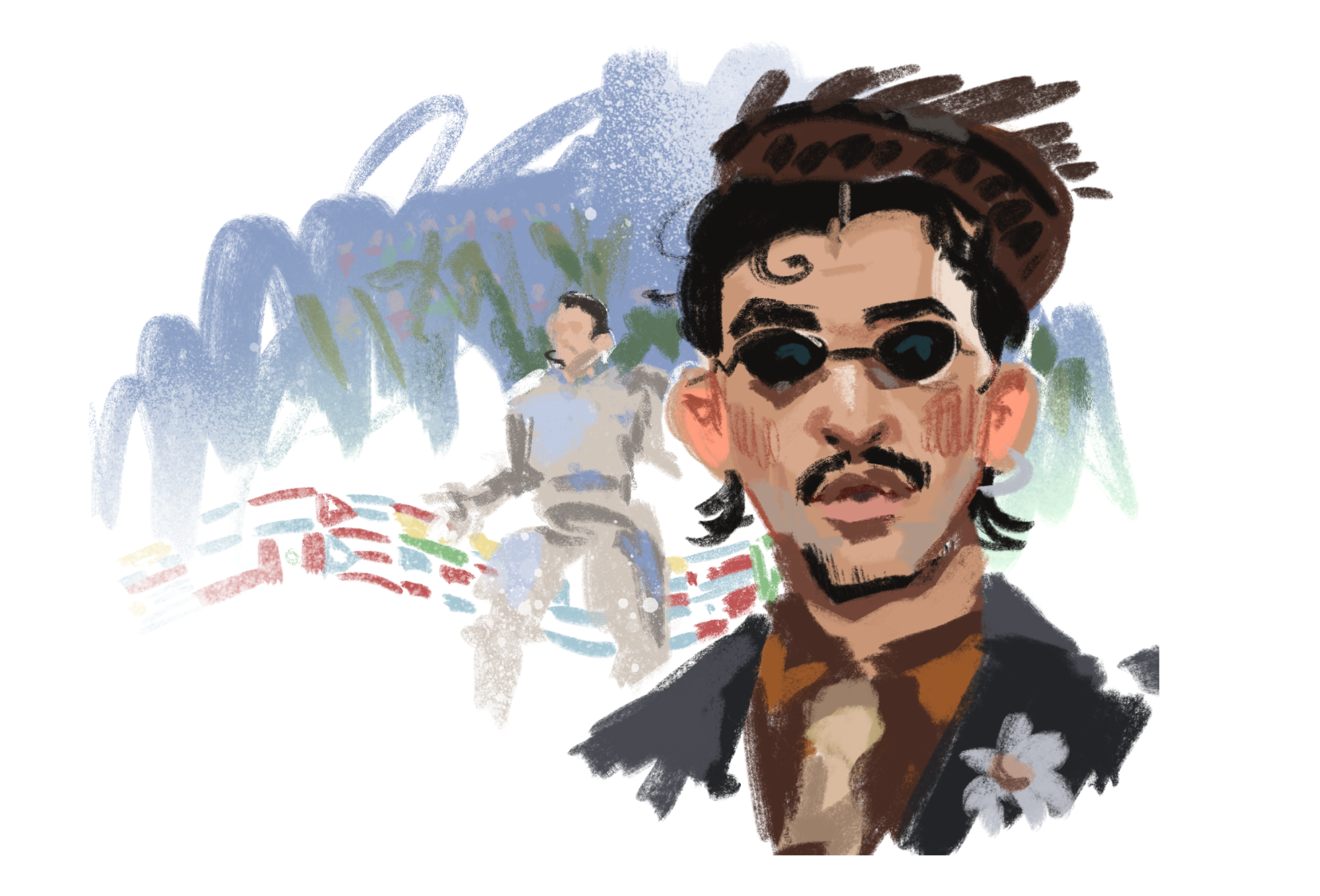
While this image appeared on TV as my family huddled in the living room watching the Super Bowl halftime show, this single homage to my childhood from Bad Bunny’s performance filled me not only with deep nostalgia but also with a sense of visibility, and I knew I was not alone.
With my family consisting of immigrants from Mexico and myself being of Latino descent, seeing my flag on the field at the end of the performance filled me with pride, not only in my heritage but also for my family. When I reflect on my background, I see more than just enjoyable music; I recognize the upheld traditions that emphasize the importance of family and the culture of bringing life into every environment. I can only imagine how other generations of Latino immigrant descendants saw a piece of themselves in that performance and felt the same sense of pride.
Actually, countless early memories of mine are family gatherings lasting far past my bedtime, leaving me to find a place to rest in unusual places, which later became less of a last resort and more of a special talent. Surrounded by music, I managed to fall asleep anywhere, from a row of chairs with my dad’s coat for a blanket, to the arms of a family member.
These small moments are a significant shared token of Latino traditions that my family members and I can relate to. With an intimately implicit poke at this Latino cultural norm, Bad Bunny made himself all the more relatable — not only to sleepyheads like me — but undoubtedly to a majority of the Latino community.
Representation, specifically through the globalization of Latino music, helps sustain the spark of heritage, preserving the smallest yet most relatable moments that define our culture. Beyond chart-topping hits, it creates visibility for the Latino community and integrates its cultural traditions worldwide, just like we saw with the Super Bowl, firsthand.
By granting artists like Bad Bunny these platforms — or even stages — to share music genres ranging from reggaeton to bomba and salsa, it extends the rich background ingrained in these styles to people of every cultural background and creates a space to be enjoyed by all.
According to a Monday, Feb. 9, article from Rolling Stone, Bad Bunny’s streams on Spotify increased by an astounding 470%, while his listeners on Apple Music grew seven times following the Puerto Rican singer’s halftime performance, only exemplifying the impact of his brief 13-minute concert.
Even before game day, the anticipation for his show grew to such proportions that for this year, social media platforms “renamed” the iconic football tradition “Benito Bowl” in honor of Bad Bunny’s given name: Benito Antonio Martinez Ocasio.
But the “Benito Bowl” was not the only proof of his international fame; the singer earned the accolade of Spotify’s Top Global Artist for the fourth time in 2025 with 19.8 billion streams, placing 2024’s recipient, Taylor Swift, in second place. Following his wins in 2020, 2021 and 2022, his repetitive reception of the title only demonstrates global superstardom and influence.
Now, this not only promotes the extension of culture through his music’s style, symbolism and lyrics that endear and illustrate aspects of his cultural heritage, but also extends these factors to every corner of the world that tuned in to the internationally streamed performance.
As a surprise guest, Bad Bunny brought out fellow famous Puerto Rican singer Ricky Martin to perform his song “Lo Que Le Paso a Hawaii,” translating to “What Happened in Hawaii.” This song spreads a message regarding the threat of gentrification and the tourism culture of his homeland, Puerto Rico, showcasing how he utilizes his platform to publicize important issues within his community and empowers Latinos everywhere to follow suit.
But Bad Bunny is not the only one to leave their footprint. Karol G, a Colombian reggaeton and urban pop singer, first rose to fame after appearing on Colombia’s El Factor X, then created a name for herself in 2017 with her breakout song “Ahora Me Llama,” which just so happens to be a collaboration with Bad Bunny.
After previously garnering three Latin Grammys, she made history as the first female artist to win the award for Best Música Urbana Album with her project Manana Sera Bonito in 2024. This win was not only historic for Latinas everywhere, but marked a huge moment of appreciation for her music on a stage extending beyond Latin countries.
Bringing corridos tumbados, a subgenre of Música Mexicana combining traditional Mexican corridos with hip-hop and rap, to a global stage, singer Peso Pluma has also become a cultural icon by broadcasting traditional sounds of Mexico far beyond the country’s borders.
His not-so-overshadowing classic styles bring visibility to his home country’s traditional sounds while passing them on to the next generation with a modern spin. The singer is also marking milestones as the first Mexican artist to top the Billboard Global 200 and the first Mexican artist to perform on The Tonight Show Starring Jimmy Fallon.
In all honesty, nothing is more inspiring than to see how Latino cultural representation has not only expanded throughout the United States but has planted significant seeds in countries around the world.
Moreover, viral TikTok and Instagram clips surpassing 1.2 million views feature Mariachi and Baile Folklórico dancers performing in front of the Colosseum in Rome, Italy, display the reach and influence that Latino music holds worldwide, and the spread of culture from its origins in Jalisco, Mexico, to the streets of a city on an entirely different continent.
Likewise, reggaeton, a genre that merges reggae rhythms with hip-hop, salsa and bomba, paved its own way into the nightlife culture of places like Japan. Its prominence is boosted from special events like “Yonaguni Fest,” a popular Latin music party series that originated in Shinjuku and is named after Bad Bunny’s song “Yonaguni,” a Japanese Island. The festival itself extended even beyond one city, and into places like Osaka, Taiwan and South Korea.
Cultural representation extends well beyond just Latin music, but also into various sectors of life, and proves that cultures thrive when celebrated and enjoyed by all.
Clearly, Latin music’s prominence is not just a trend, but proof that cultures thrive when shared and celebrated by people of every ethnicity. The visibility this creates for Latinos, young and old, nurtures pride towards the beautiful culture ingrained in our history, our family and our traditions.
It’s as simple as this: more representation creates more pride, blossoming the flowers of Latin culture in the garden of global heritage — straight from the roots.